This past March, I traveled with another campus minister and six college students on a spring break trip to Cumberland Island, a national seashore just off the southern coast of Georgia. In my work with Presbyterian Campus Ministry at UNC-Chapel Hill, trips like this create opportunities for students (and staff) to step outside familiar routines and pay attention to community, to place, and to the ways the Divine might be encountered in unexpected corners of the world.
Cumberland is a place that feels, almost immediately, like a different world. The island is largely undeveloped. Live oaks stretch wide with limbs draped in Spanish moss, palmettos blanket the forest floor. Wildlife moves freely, including armadillos rustling in the brush, wild horses wandering the shoreline, and birds calling from every direction. It is a landscape that invites you to slow down simply by being in it.
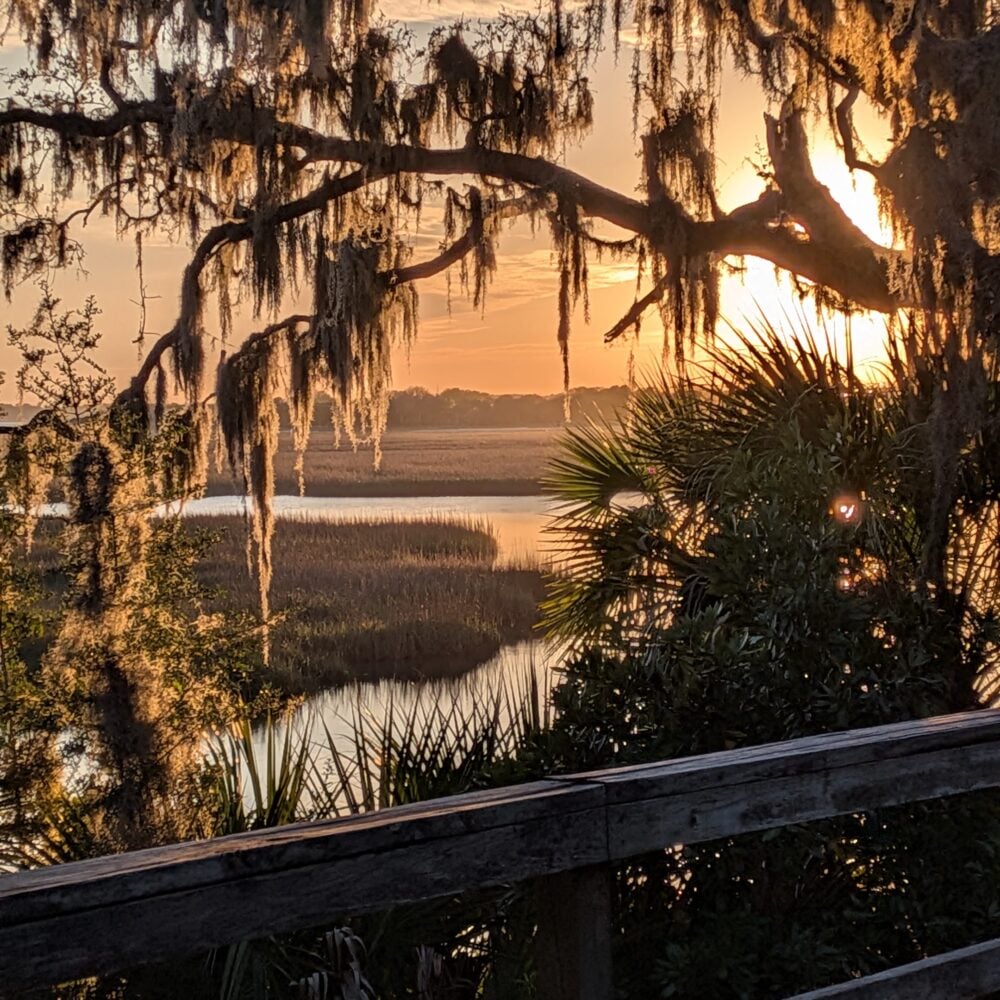
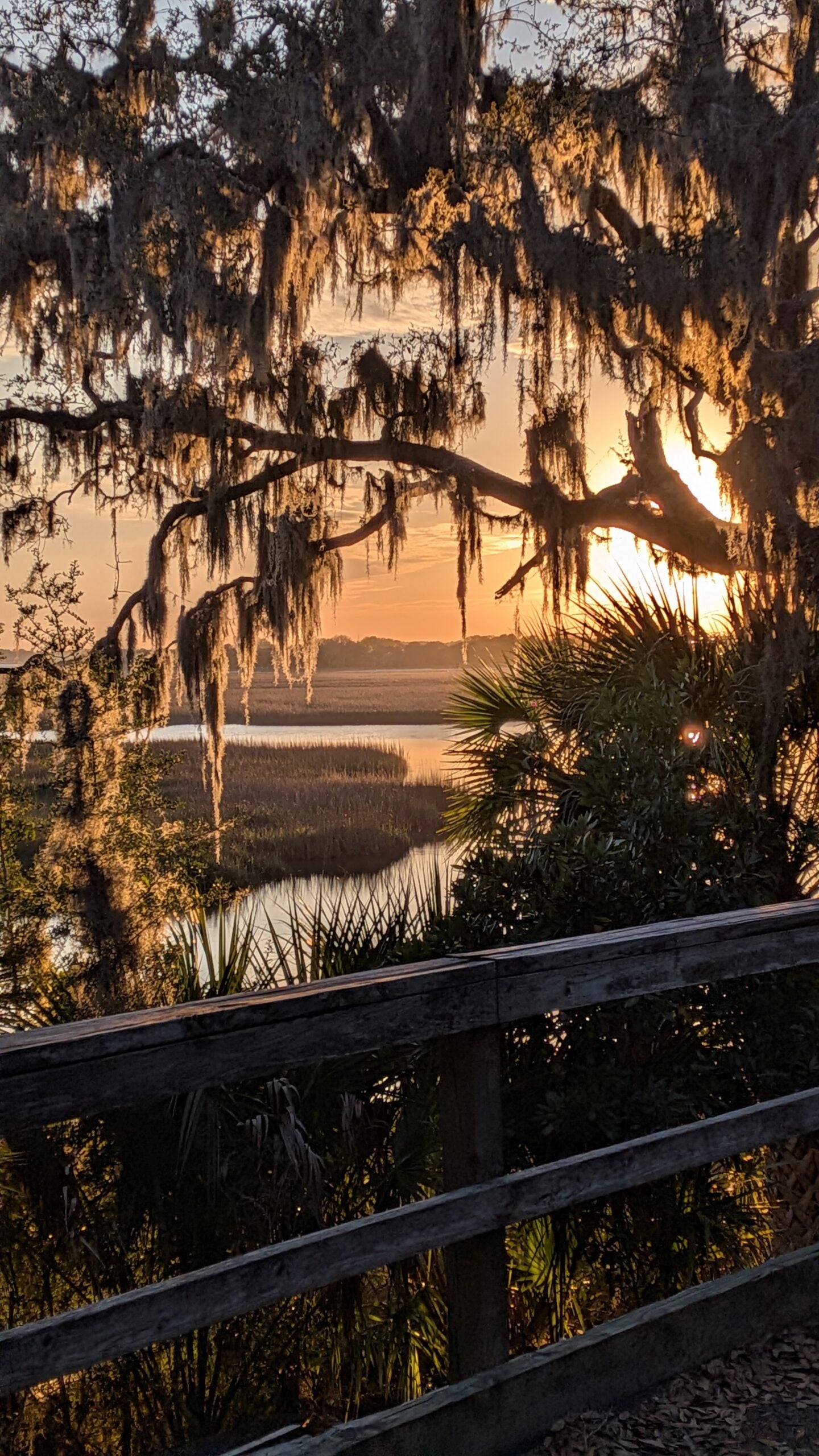
What made our week especially meaningful, though, wasn’t just the beauty of the place; it was the rhythms we stepped into while we were there. Each day, we watched the sun rise over the Atlantic and set over the marsh. (Well, almost each day; early wake-ups are hard no matter where you sleep.) Cumberland is narrow enough that you can stand in one place in the morning, facing east to watch the sunrise, and then walk less than a mile west to watch the same sun complete its arc across the sky and set beyond the mainland. There is something grounding about witnessing that full movement of light, day after day. It begins to shape your sense of time… not by deadlines or notifications, but by something older, steadier, and entirely outside of your control.
Over the course of the week, I found myself noticing how different this rhythm felt from the ones that usually organize our lives. During the semester, it’s easy for all of us (students and staff alike) to orient ourselves around productivity: assignments, grades, meetings, accomplishments, the constant question of “what’s next?” These rhythms are not entirely bad, but they can become all-consuming. They can trick us into believing that our worth is measured by what we produce or achieve. Maybe you have some of these rhythms in your own life?
For that week, Cumberland offered us something different. It invited us into rhythms that feel older than urgency and wider than achievement. The rising and setting of the sun, the tides moving in and out, the quiet persistence of trees and grasses growing where they have for generations…. None of it depended on us, and yet we were held within it.
One of the gifts of the week was being reminded that we are not separate from creation, nor are we at the center of it. We are participants, creatures among creatures, part of something much larger than ourselves. There was a kind of relief in that realization. If the world does not depend entirely on us, perhaps we are free to live differently within it, free to notice the miraculous cycles unfolding all around us, without or in spite of our presence.
I saw glimpses of this shift in our group. They came during long walks without a clear destination, shared meals cooked slowly over camp stoves, and quiet moments watching the sky change color. These were not “productive” moments in the way productivity is most commonly defined for these college students, but they were deeply formative. They reminded us that being present, attentive, and connected to one another, to the land, and to the Spirit moving through both is its own kind of faithfulness.
As we returned home, the usual rhythms of school and work quickly reappeared, but I carry with me the hope that something from that week remains. I hope we might remember and remind one another (even in small ways) that our lives are held within a larger, more gracious rhythm. A rhythm where our value is not determined by what we accomplish, but by the simple, sacred truth that we belong to a living world full of mystery, beauty, and interdependence.


Leave a Reply