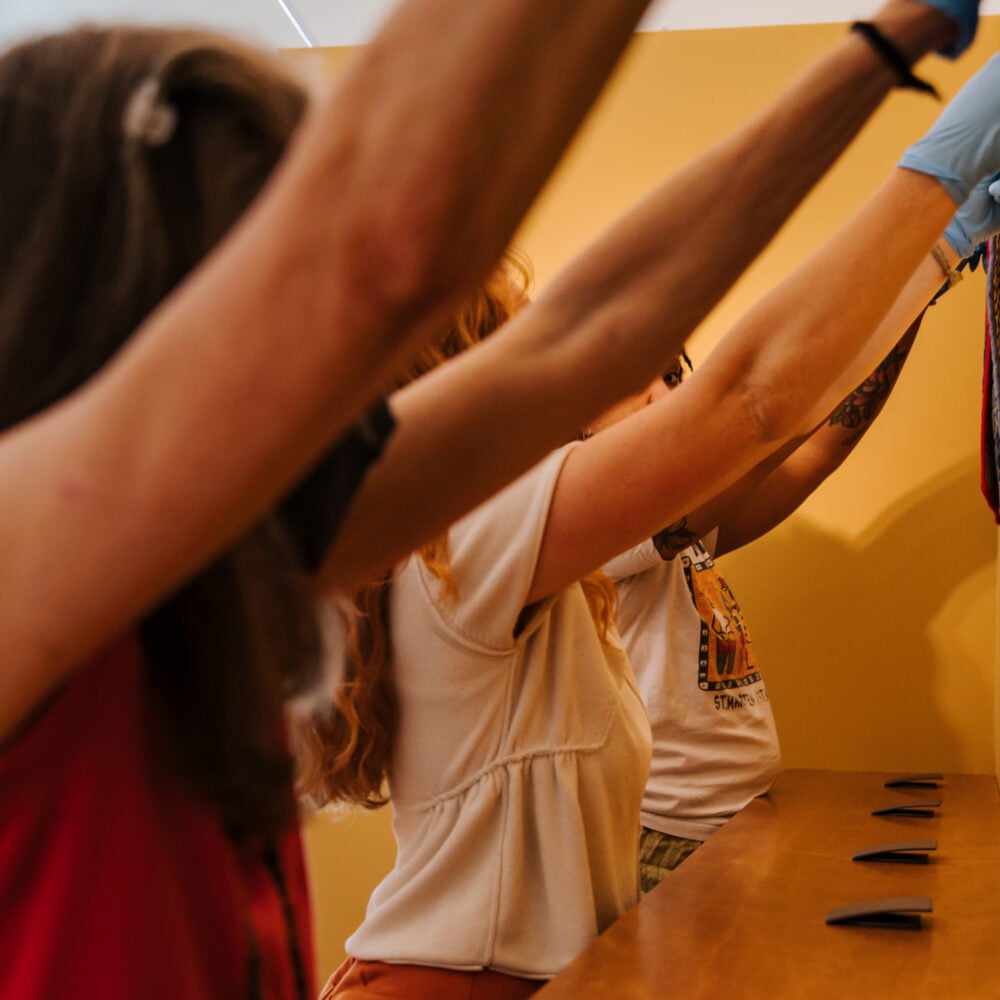
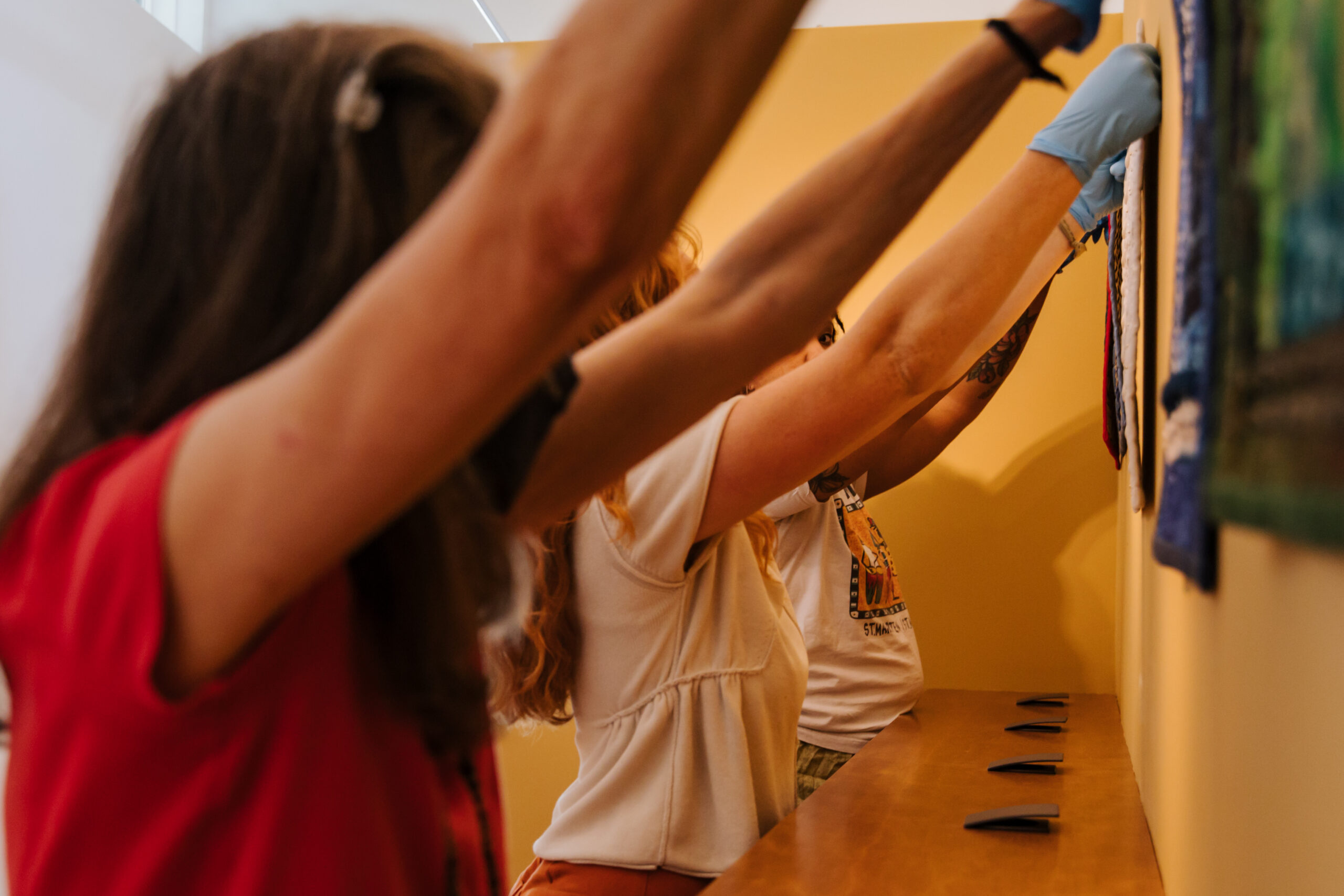
Late on a hot August day in Chapel Hill, North Carolina, in the final weeks of a four-month run of the textile exhibition Stitching Our Stories, warm light from Cassilhaus pours out into the surrounding woods. The sun is just starting to set, and waves of art lovers from all over the state file into the home-based gallery. Tonight, the exhibition’s three main artists will captivate a diverse audience with their art and reflect on stories of connection, ancestry, and fabric. Their words dance throughout the exhibit space, floating into the second story gallery where their quilts are hung with exquisite attention to detail. This main gallery presents a feast of colors, textures, and emotion, inviting viewers into connection, reflection, and imagination. It’s a marvel to think that just five months ago, this exhibition was a seed of an idea.
Since the early 2000s, the Resource Center for Women & Ministry in the South (RCWMS) has expanded its focus to include arts and creativity, recognizing the pivotal role that the arts play in spirituality and liberation. In my new job as Arts Coordinator & 50th Anniversary Curator, I spend a lot of time diving deep into past projects, like 2006’s Art and the Feminine Divine festival and 2008’s documentary film about the late artist Meinrad Craighead. Since I joined this organization in the fall of 2024, I learn about most of these pivotal art projects in retrospect (after all, this organization turned twenty-six when I was born in 2001!). But in the Spring of 2025, one of our most exciting creative projects took place, and I was lucky enough to be part of every step of the process. As a photographer by trade, I took the initiative to document this six-month endeavor, which I share with you here.
Phase One: Scrappy Beginnings
For those who’ve never been part of curating an exhibition, you may be wondering the same question my team and I were pondering in February of 2025: How on earth does one pull off an immersive art exhibition in three months?
As with many RCWMS-sponsored projects, we learn as we go. That’s the ethos RCWMS founder and leader Jeanette Stokes has infused into every project over the decades. For context, we’re a small non-profit with a rotating staff, often made up of current or former seminary students, college students, or, in my case, creatives interested in spirituality and community who happen to wind up in the magical web of RCWMS.
Luckily, this time we had someone to guide the way: Frank Konhaus, Director of the Cassilhaus Artist in Residence and Exhibition Programs, and arts entrepreneur. He has led the exhibitions at Cassilhaus since their very first exhibition in 2010.
Here’s a glimpse of our process:
- We decided to create a collaboration between RCWMS, Cassilhaus, and three NC-based quilters: Jereann King Johnson (about whom RCWMS is currently making a documentary), Kimberley Pierce Cartwright (former Cassilhaus artist-in-residence, and director of the RCWMS’s Kindred Spirits quilt conferences), and expert quilter Sauda Zahra. We had about three months to plan, design, and execute an exhibition focused on the work of these three artists.
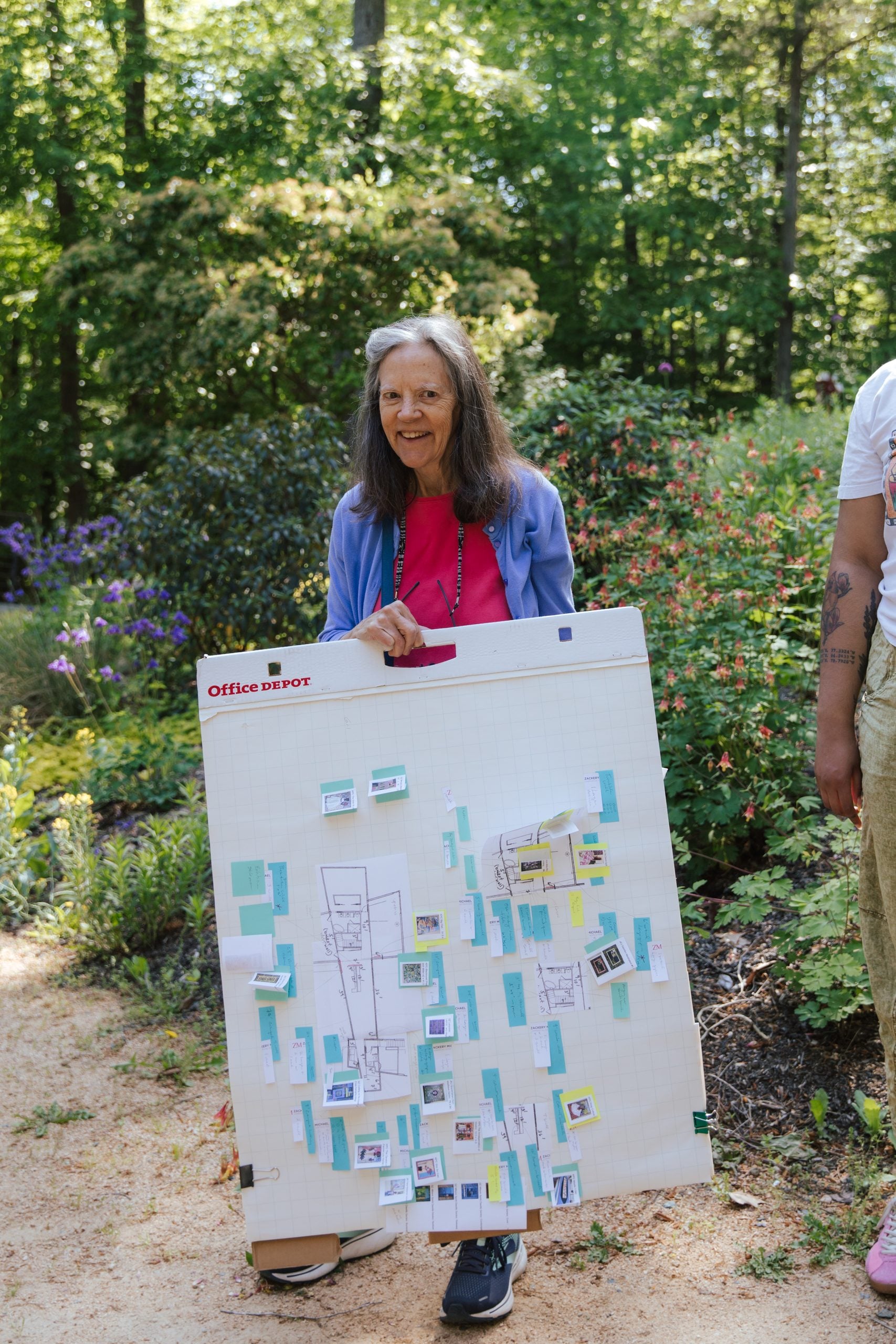
- We started with conversations between Frank and a RCWMS curatorial committee consisting of Jeanette Stokes (Executive Director), Chloé Griffin Wright (Director of Programming), Bacarri Byrd (Communications & Development), and myself. Afterward, we scheduled visits with each of our three artists to review their quilts (roughly 15-20 pieces each).
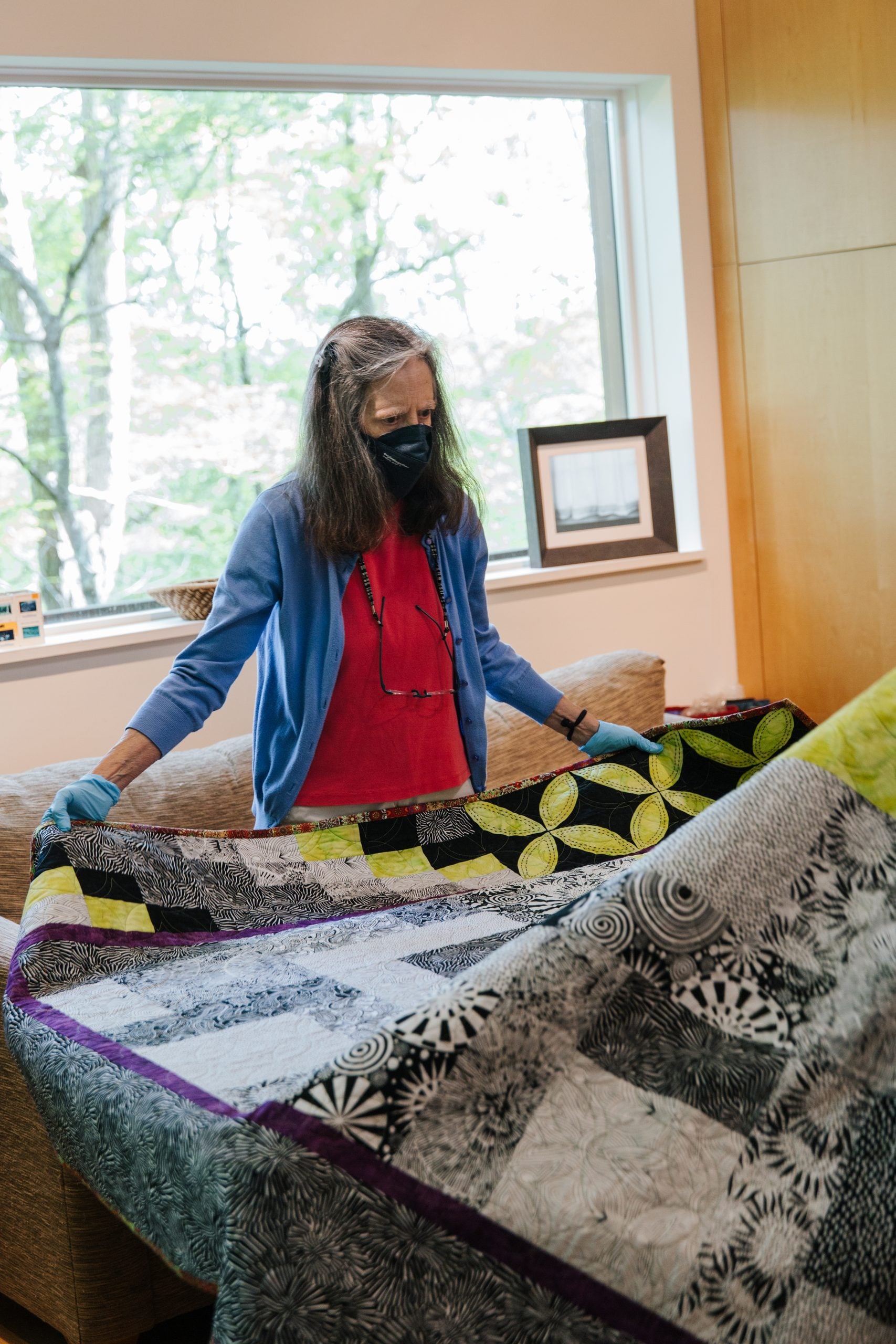
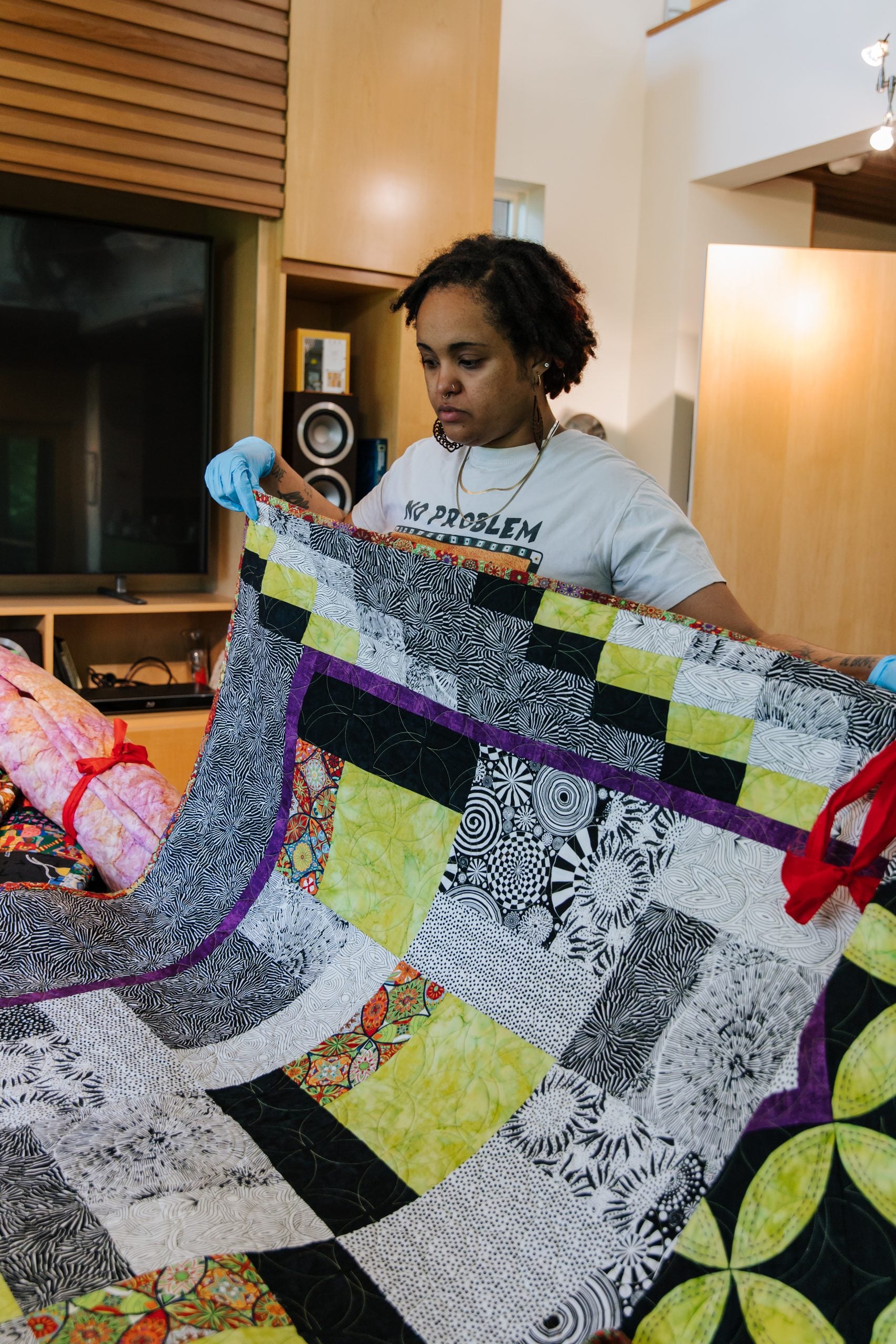
- In March we arranged in-person visits with the artists, which allowed us to see their quilts and hear the stories behind their work. Then the curatorial team and I met to discuss the themes and intentions of this exhibition, which helped us to meet the nearly impossible challenge of selecting which pieces would go in the exhibition.
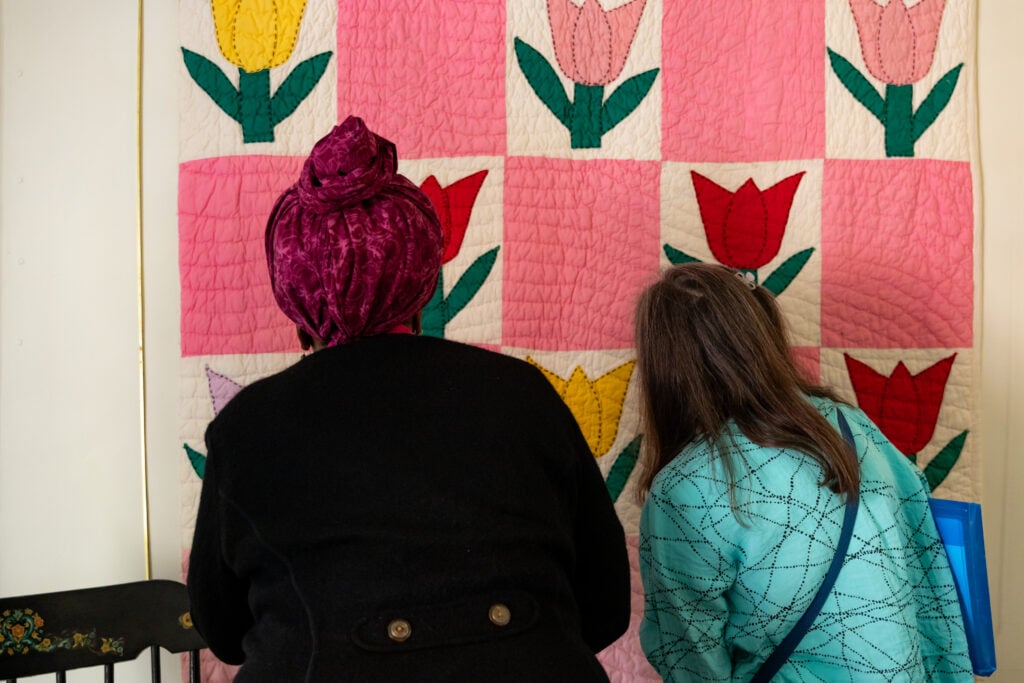
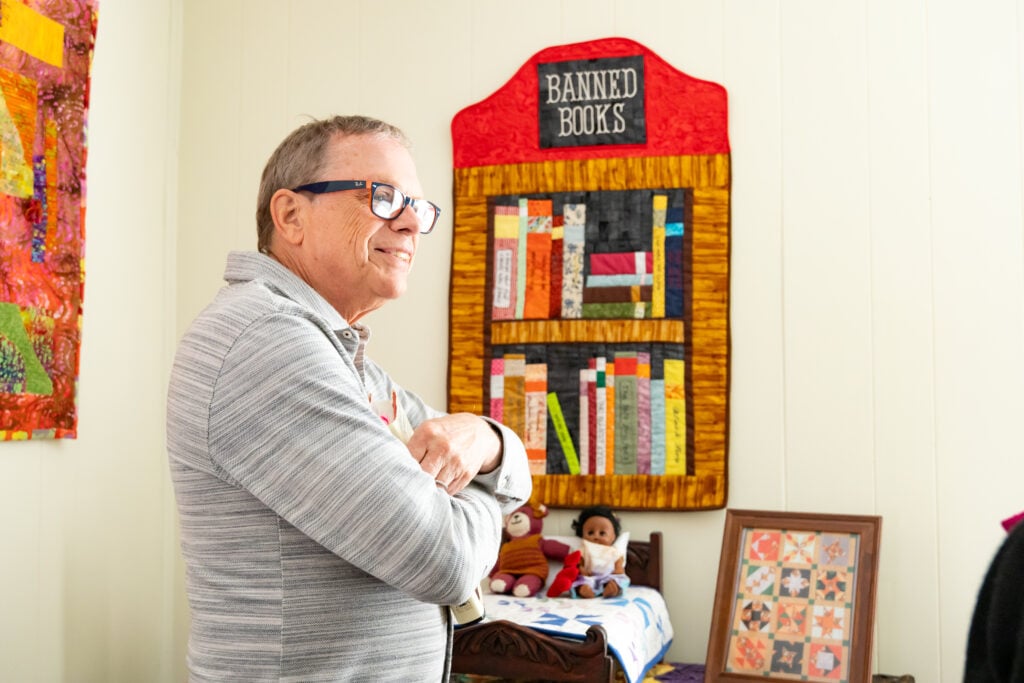
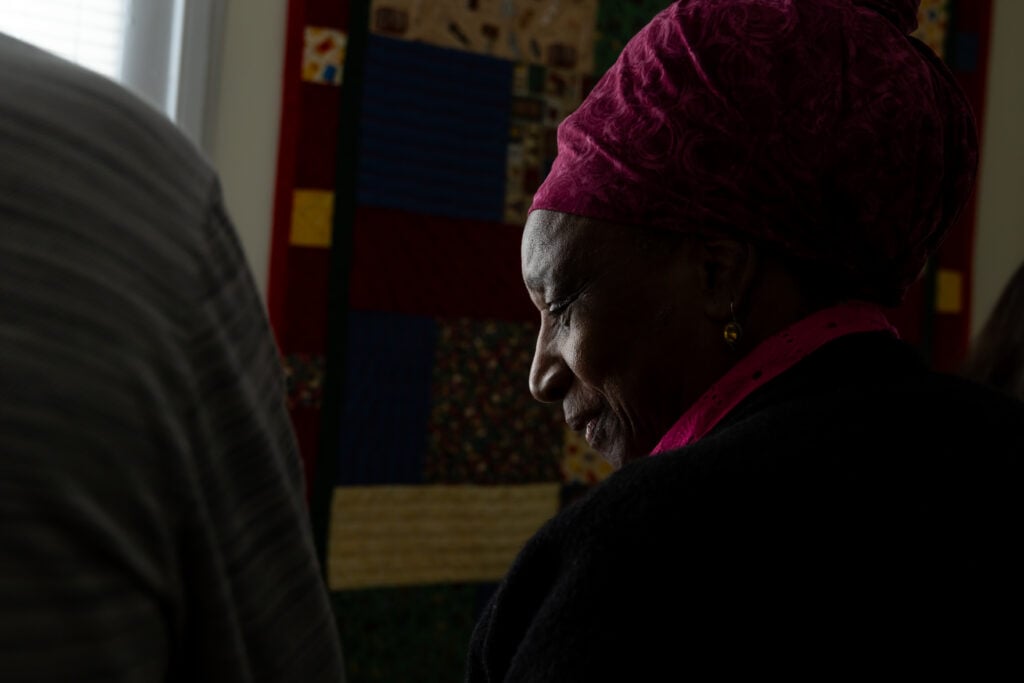
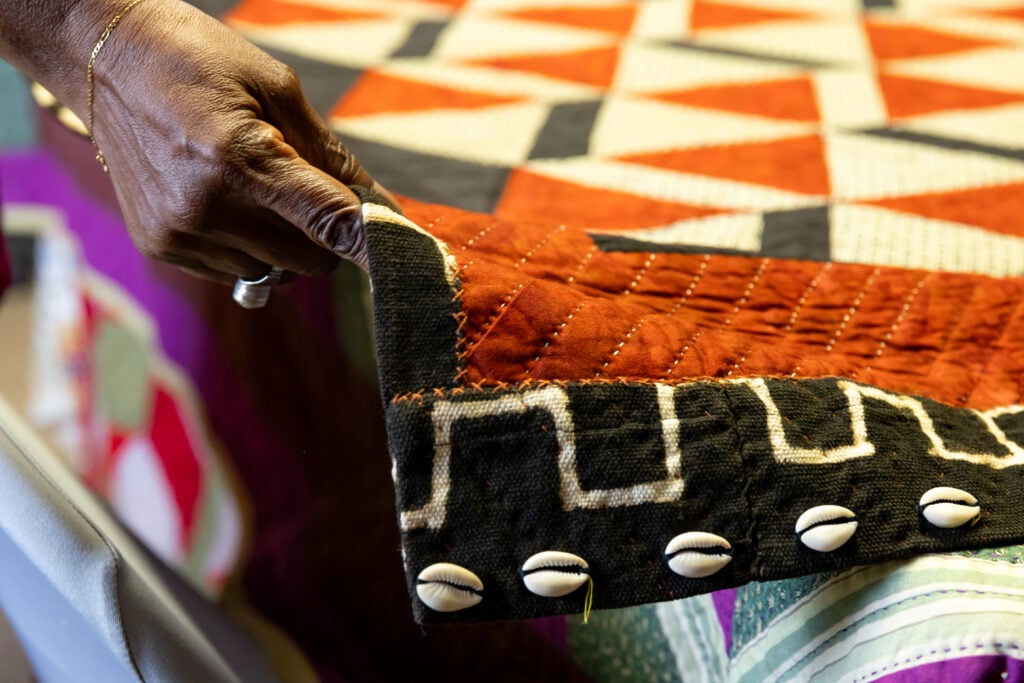
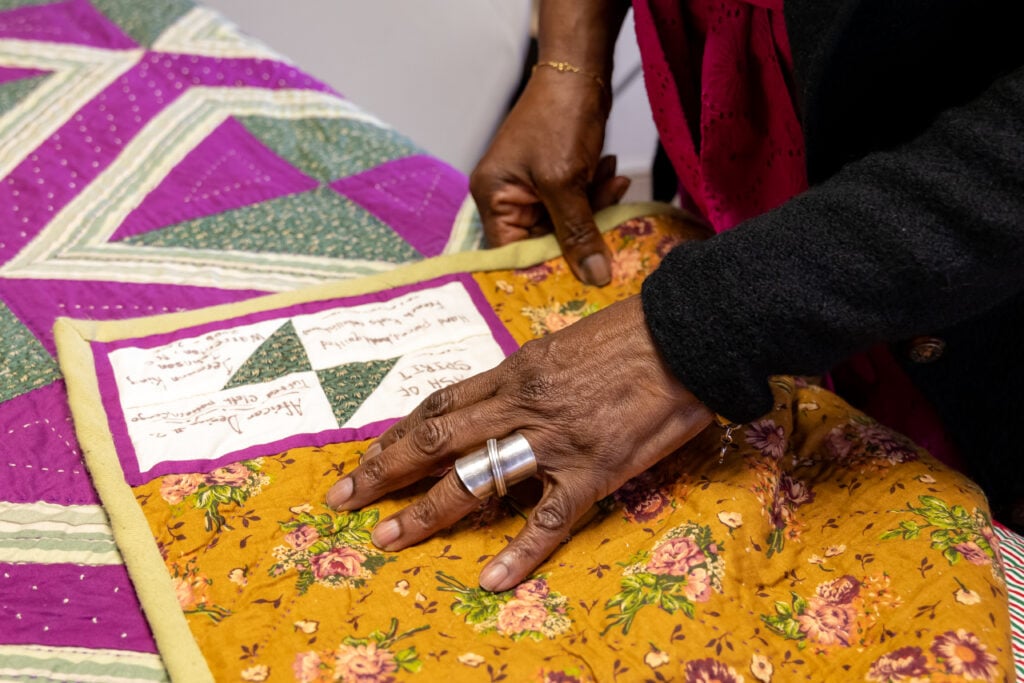
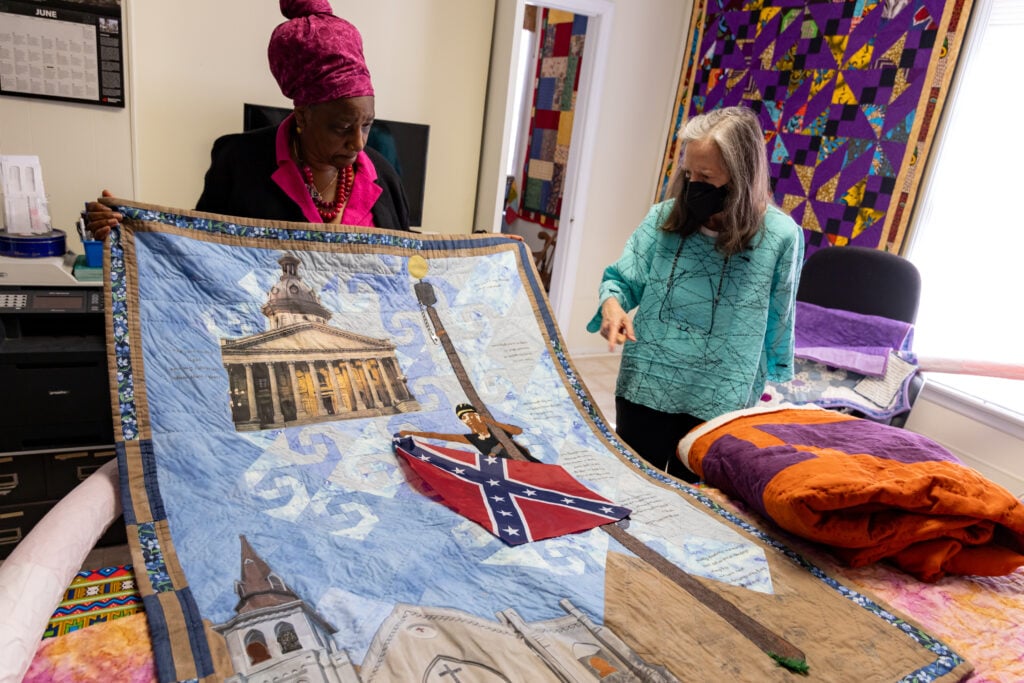
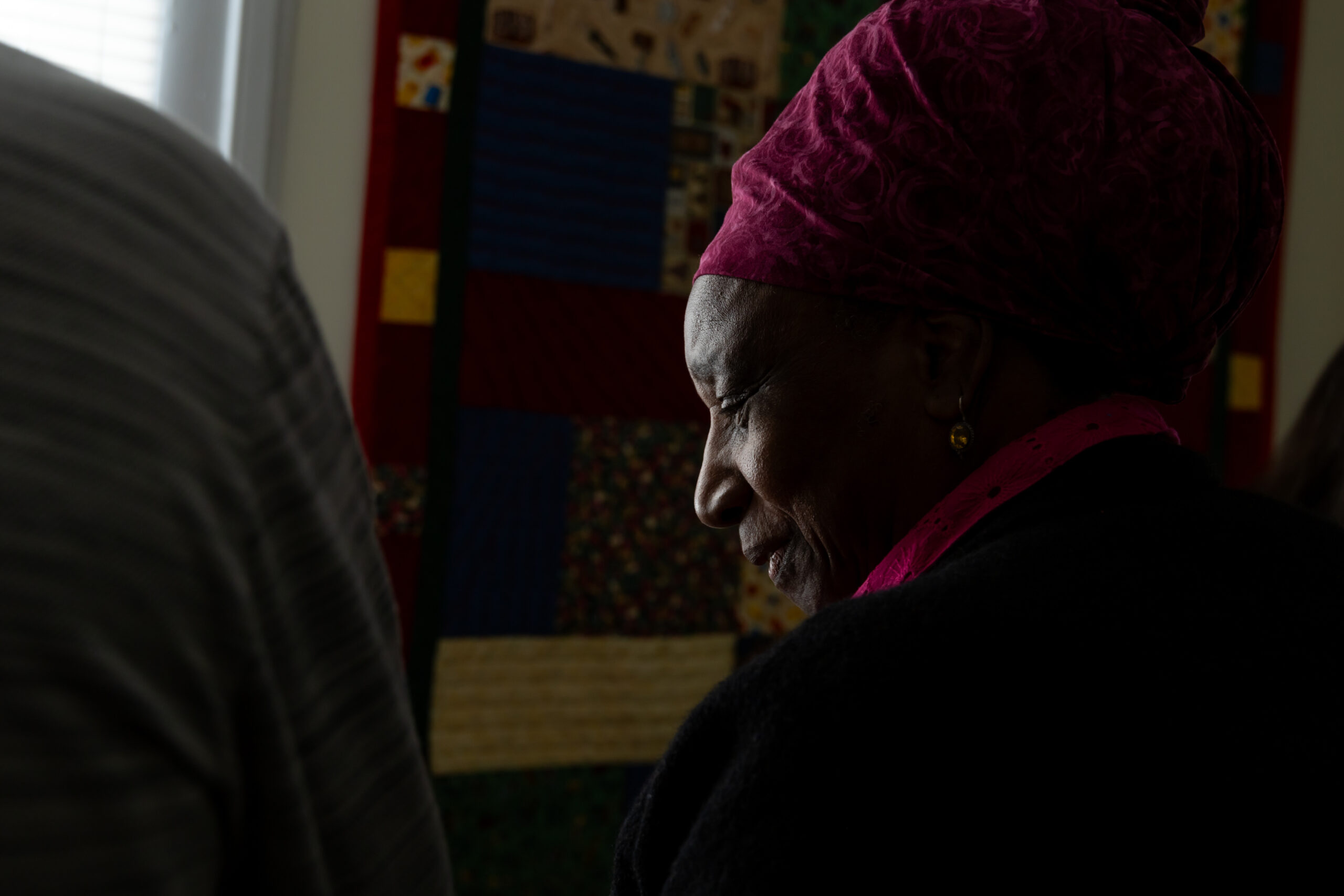
A mix of photos featuring Jereann King Johnson, Frank Konhaus, and Jeanette Stokes
Phase 2: On the Way There
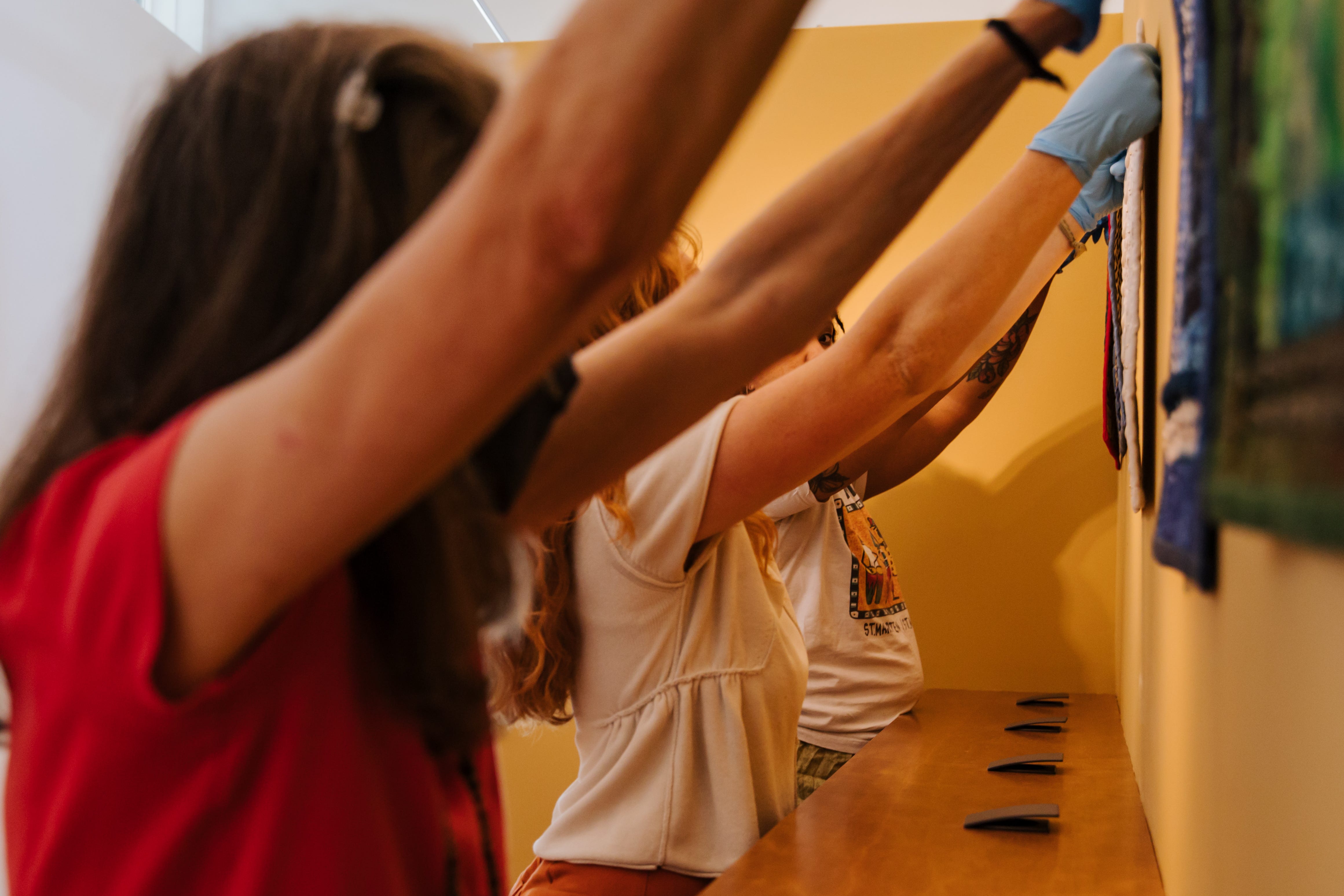
As Spring progressed, so did our show. By the end of April, we had selected most of the works that would end up in the final exhibition and settled on three thematic anchors for the show: community, imagination, and spirit.
Artist visits and Zoom calls evolved into day-long installation sessions at Cassilhaus. After months of discussion, the exhibition came together. The very first piece we hung was Kimberley’s shimmering mermaid, Big Fish.
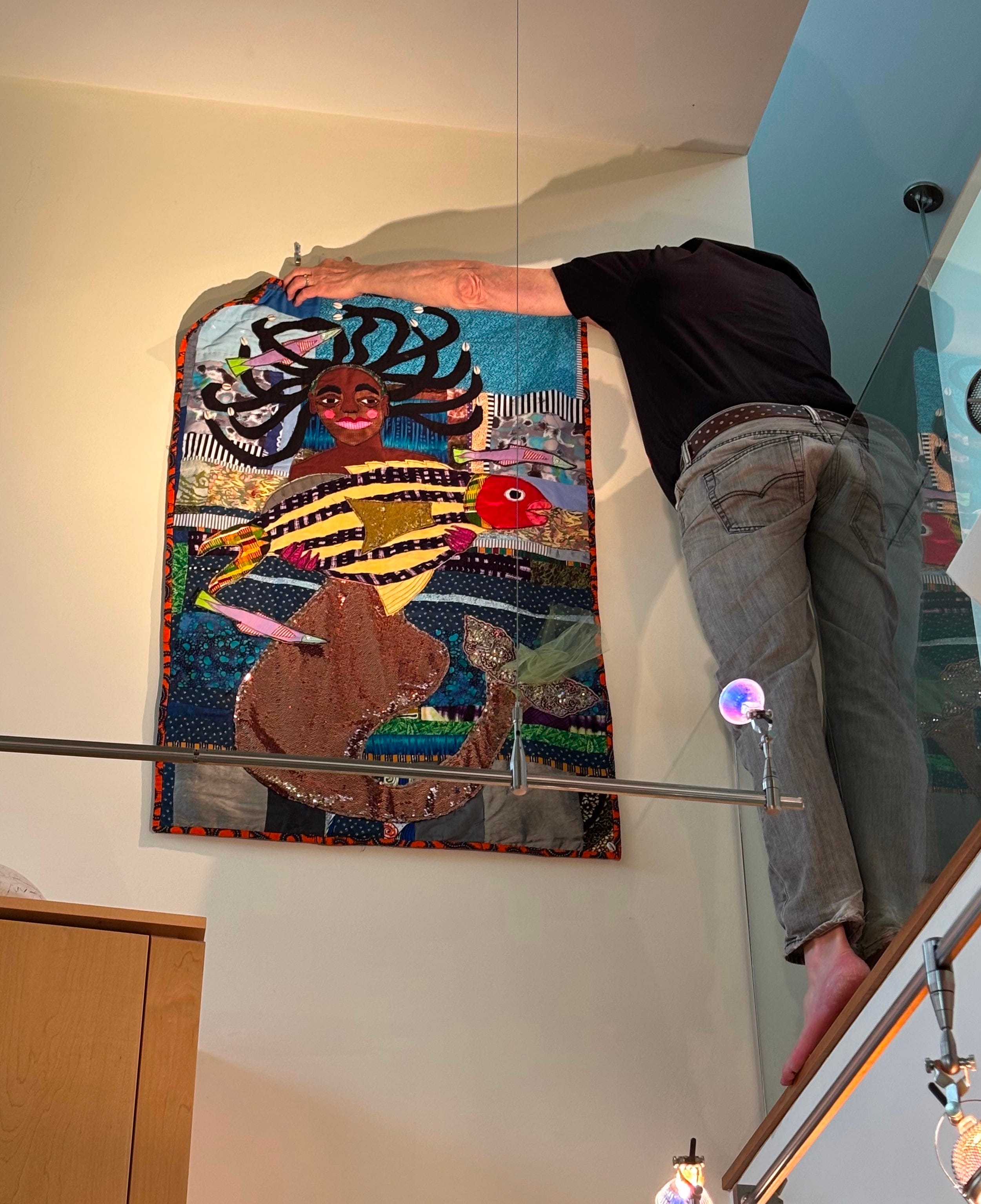
Big Fish, a favorite piece, represented the imagination pillar of our big three focuses. We placed it in a prominent spot in the gallery, making it one of the few pieces that would be visible on both floors of the two story exhibition space.
I have fond memories of this phase of the process. The weather was beautiful, and the flowers at Cassilhaus were in full bloom. I remember picking up Chloé from UNC- Chapel Hill, where she is working towards a PHD in Religious Studies, bonding with then-intern Lara, and being endlessly charmed by the two Cassilhaus cats, Jaco and Joni.
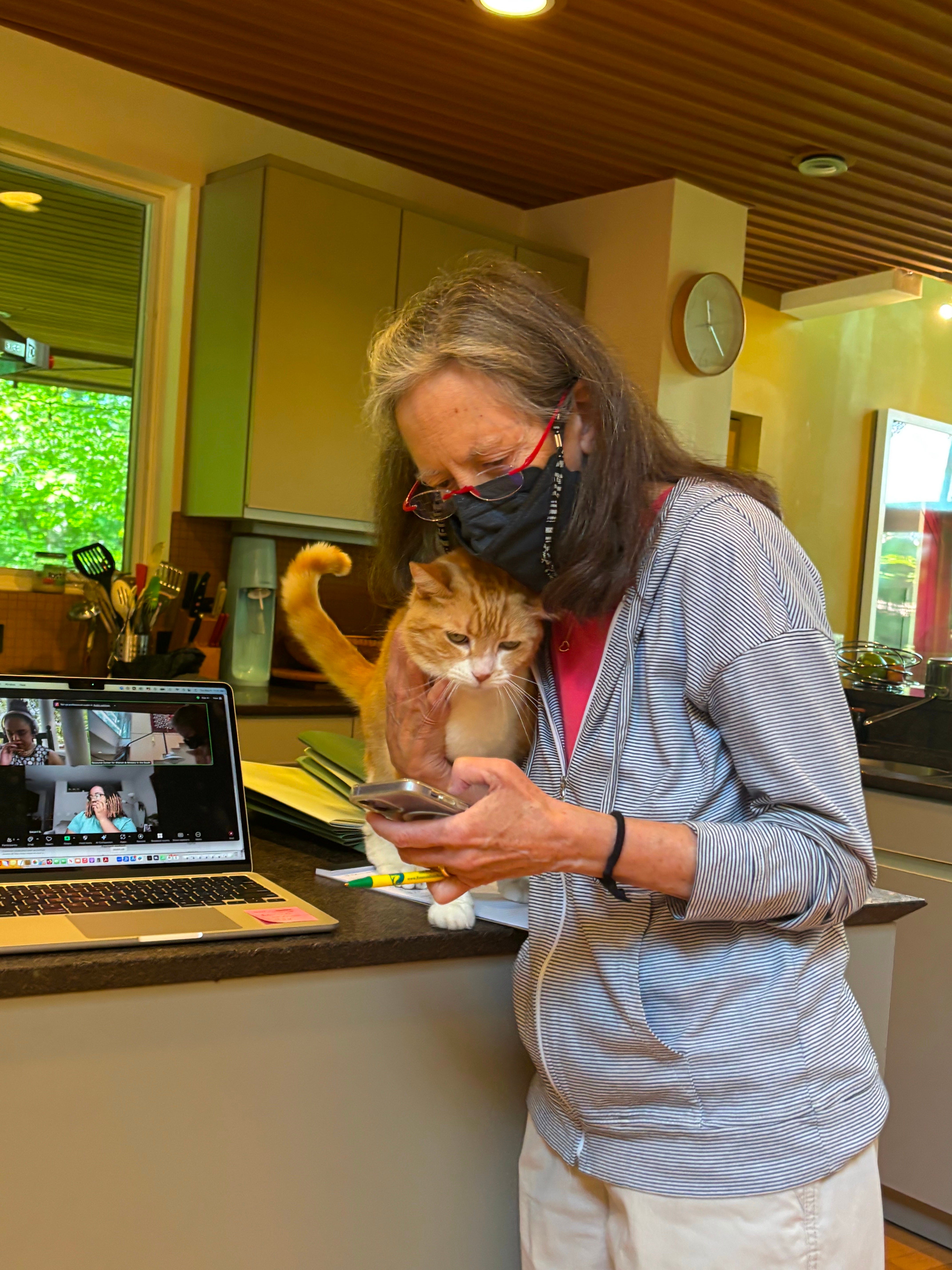
In the installation phase, the crew of collaborators grew significantly. Frank’s long-term associate, artist Ceci Stevens, and the Cassilhaus MFA intern, Caleb Rivera, were instrumental in getting the exhibition up and running. Graphic designer Dasean Burnette crafted the visual language of the Stitching Our Stories marketing imagery. I remember with pleasure the day MJ Sharp (RCWMS artist-in-residence) and I photographed every quilt in the exhibition. Additional friends and volunteers aided in this process, making that beautiful, creative magic only possible through collaboration.
Phase Three: She So Can
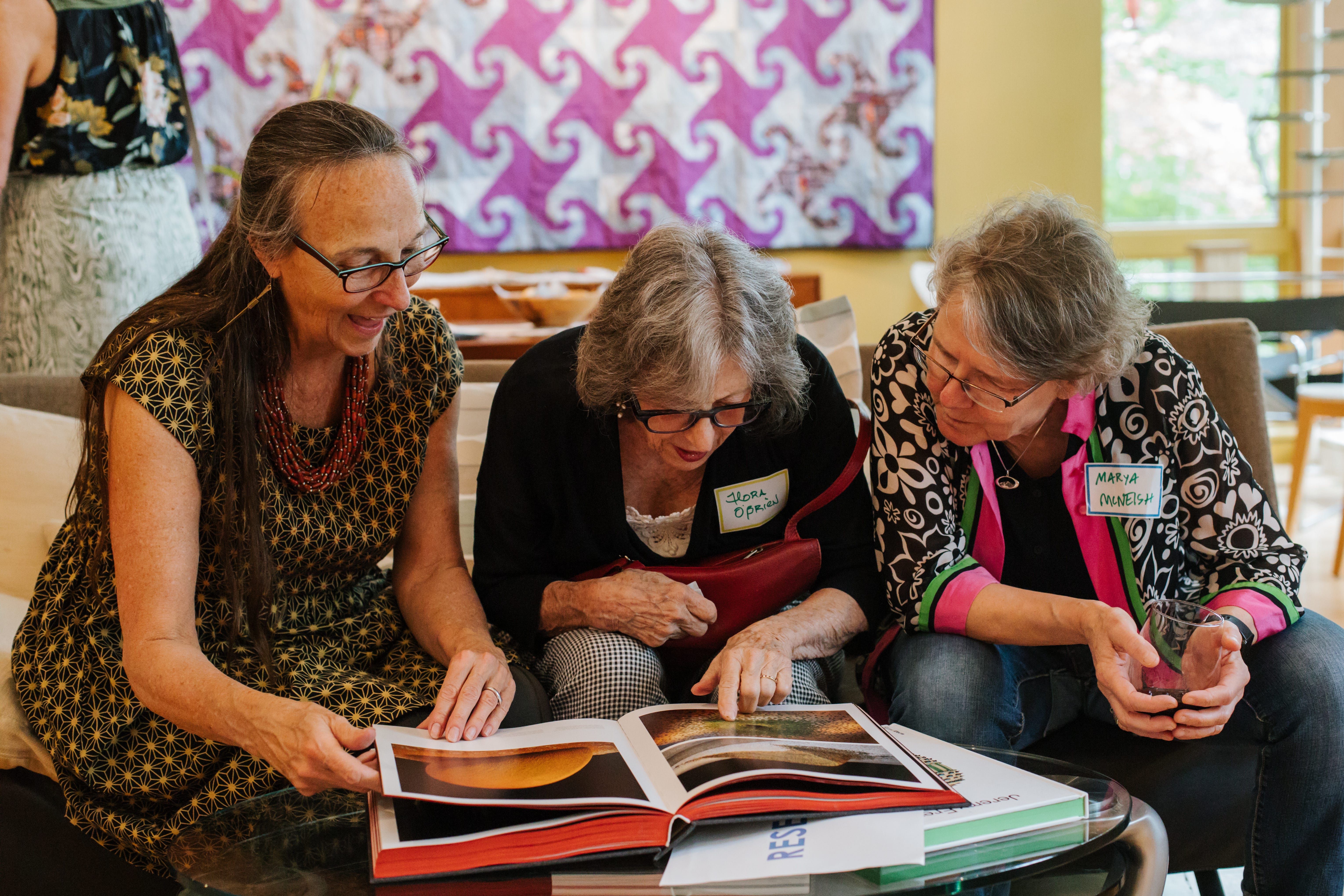
On the evening of May 29, the Stitching Our Stories exhibition officially opened to the public. The opening reception sold out in a matter of hours, even with two sessions available. This August evening marked the beginning of the nearly three-month run of the show which included a handful of special events to engage new audiences with the art, including a performance by vocalist and songwriter Lois Deloatch and a panel discussion with the artists moderated by Chloé.
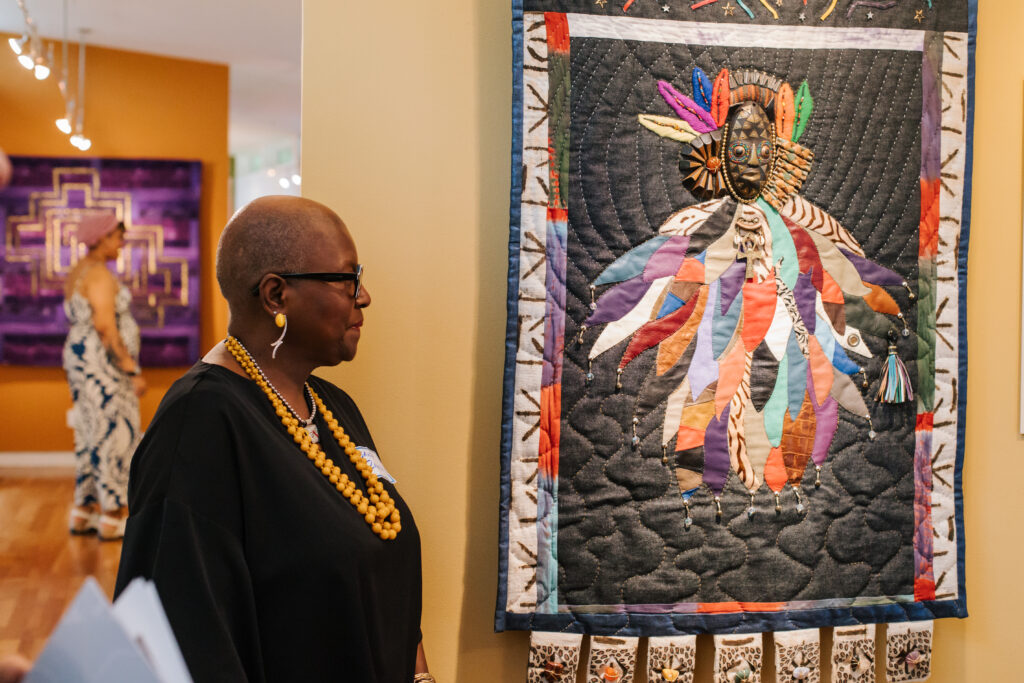
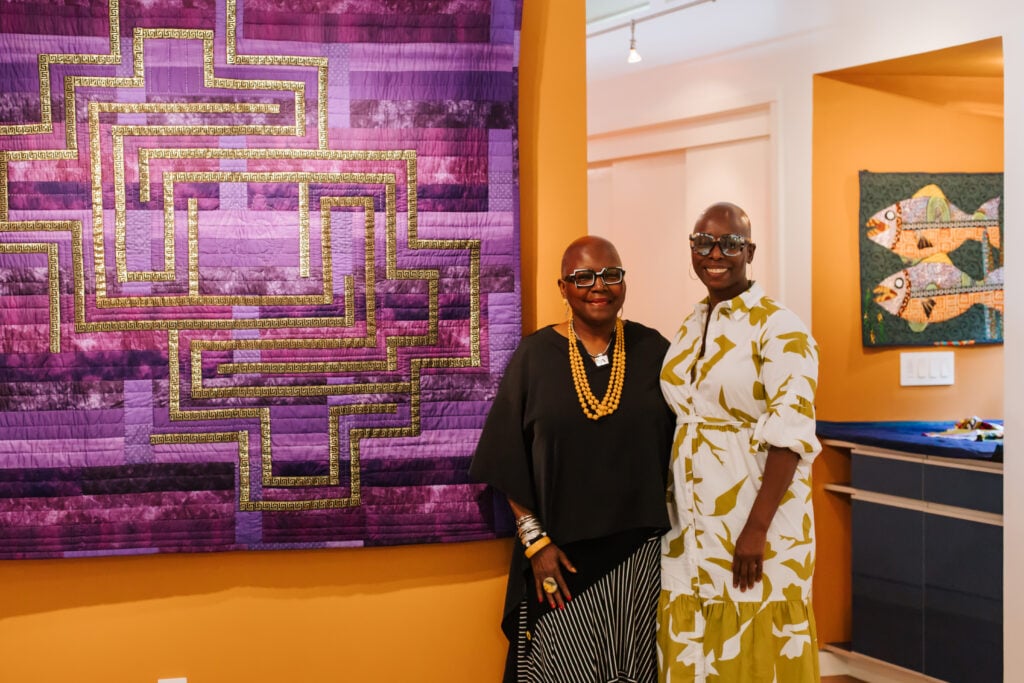
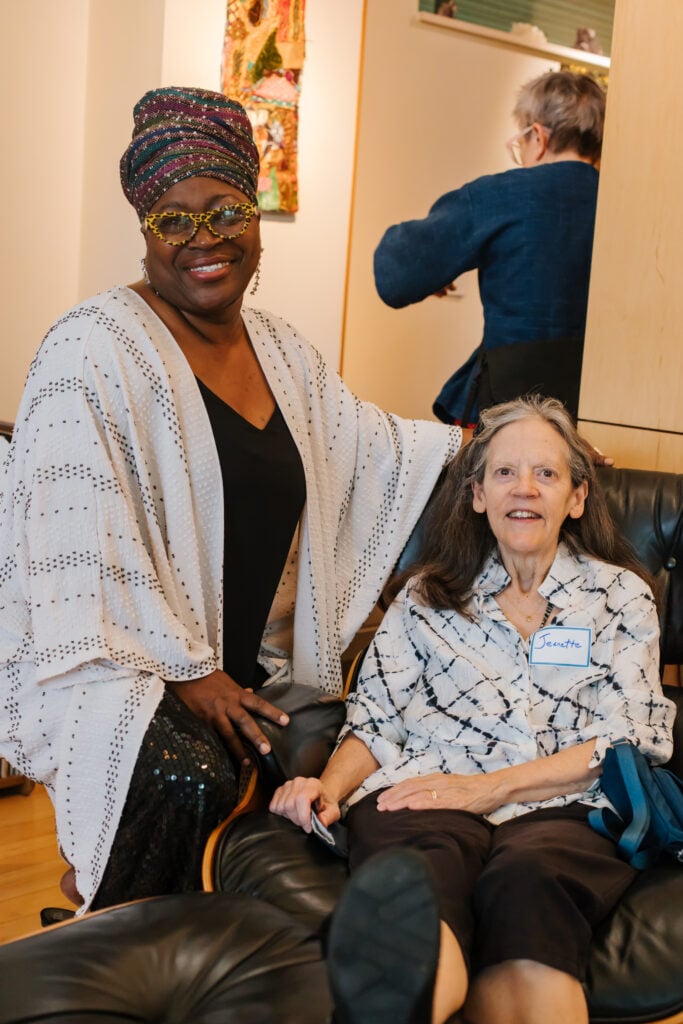
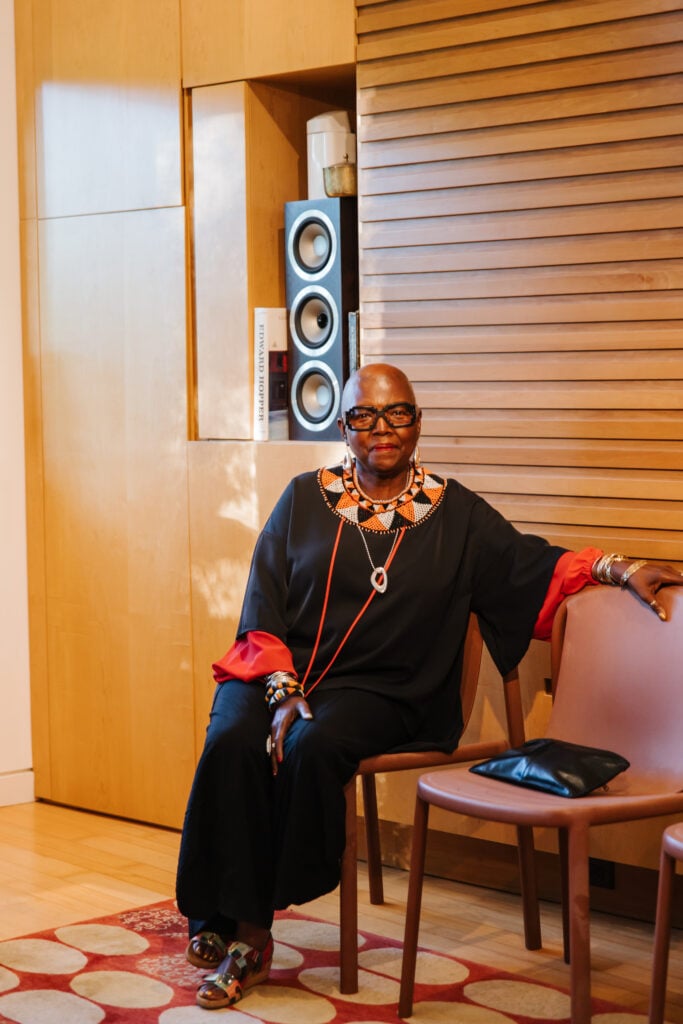
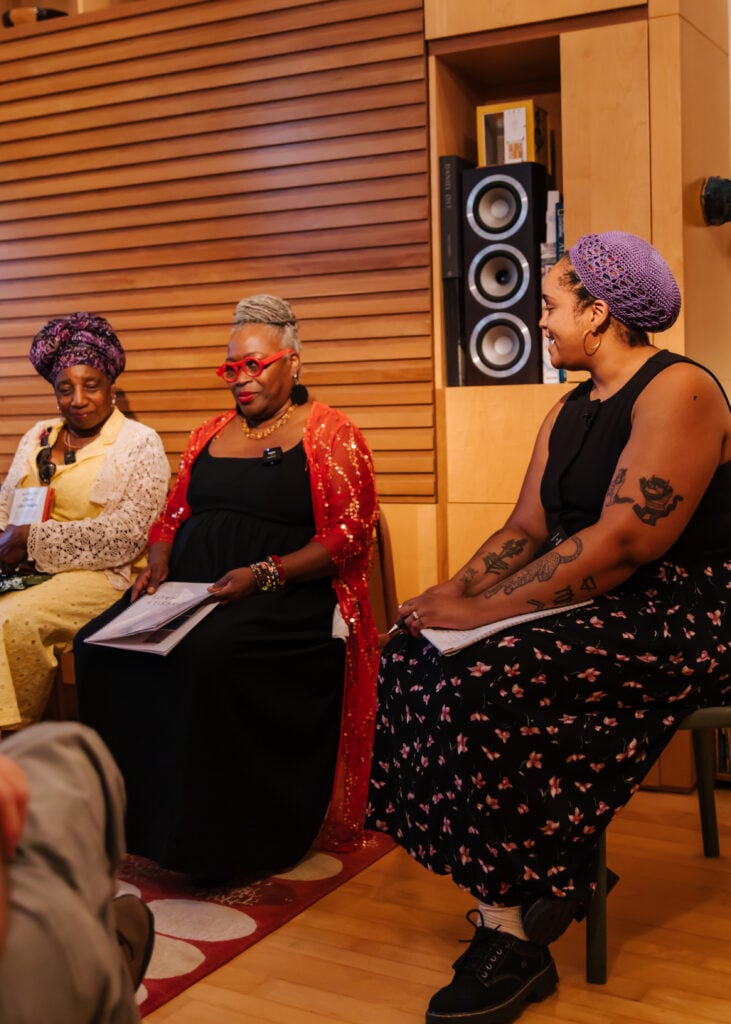
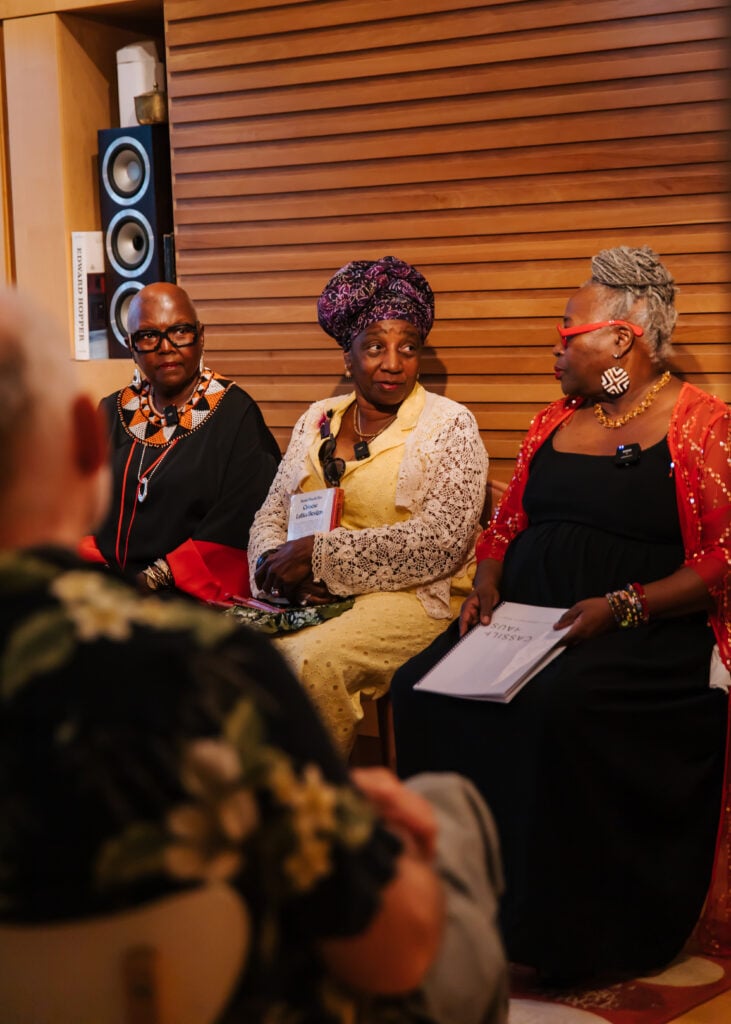
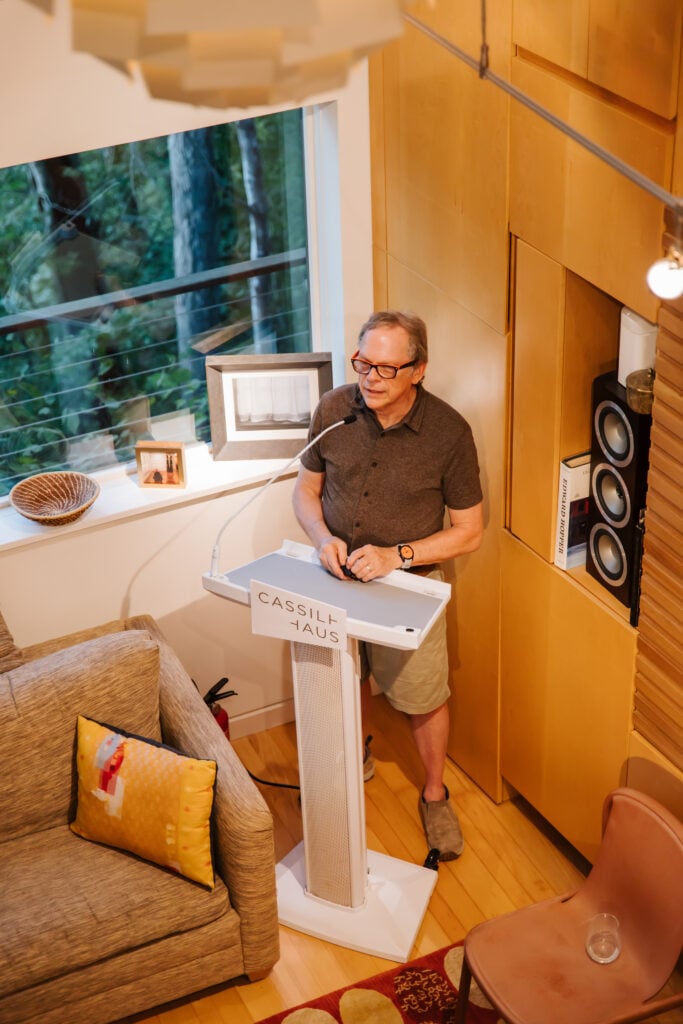
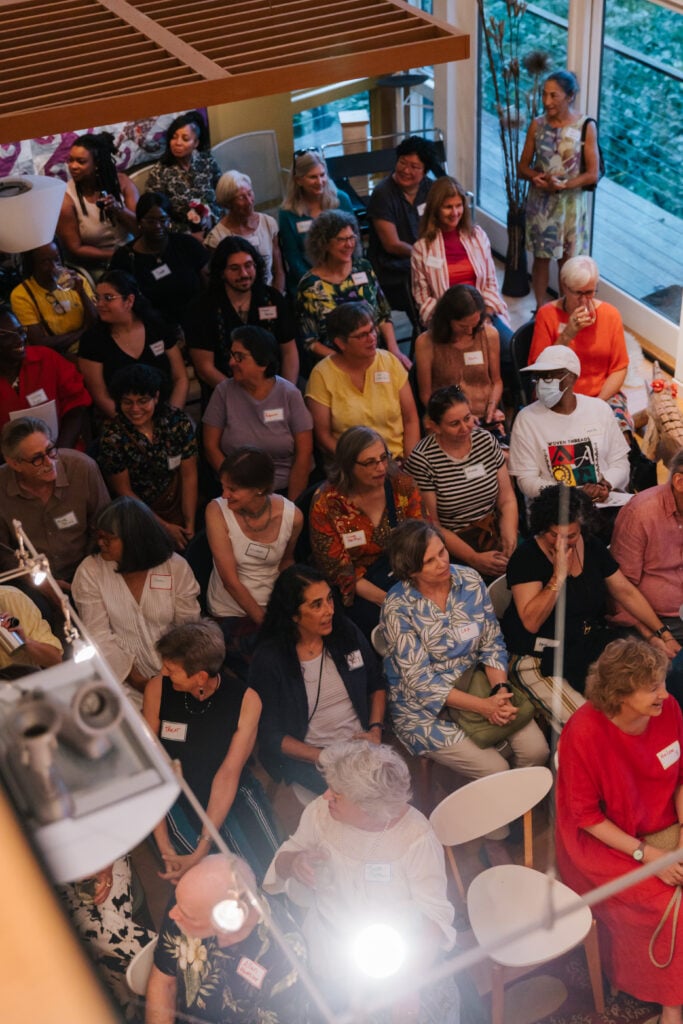
The exhibition may have closed, but the ripple effects of this project continue to grow. Working on the curatorial team gave me the confidence to apply and qualify for an internship with the North Carolina Museum of Art this past Fall. It was an amazing experience that has fostered my passion for art and curation!
Additionally, this project, along with the concurrent Juneteenth quilting conference Kindred Spirits, inspired Chloé to reimagine her dissertation project in Religious Studies. Through an ethnographic project conducted alongside African American quilters, her research explores connections between creative expression, spirituality, autonomy, and identity, particularly for Black women in the southern United States.
If you missed this exhibition during its run, you can take a 3D tour here or watch the recorded artist panel from August 18 here.
Leave a Reply