Written by Claire Hambrick
“Come to the beach. Rest your body, gaze at the water, listen to the wind. This retreat for women offers time to play, renew the creative self, and feel the presence of the sacred through the practice of meditation.”
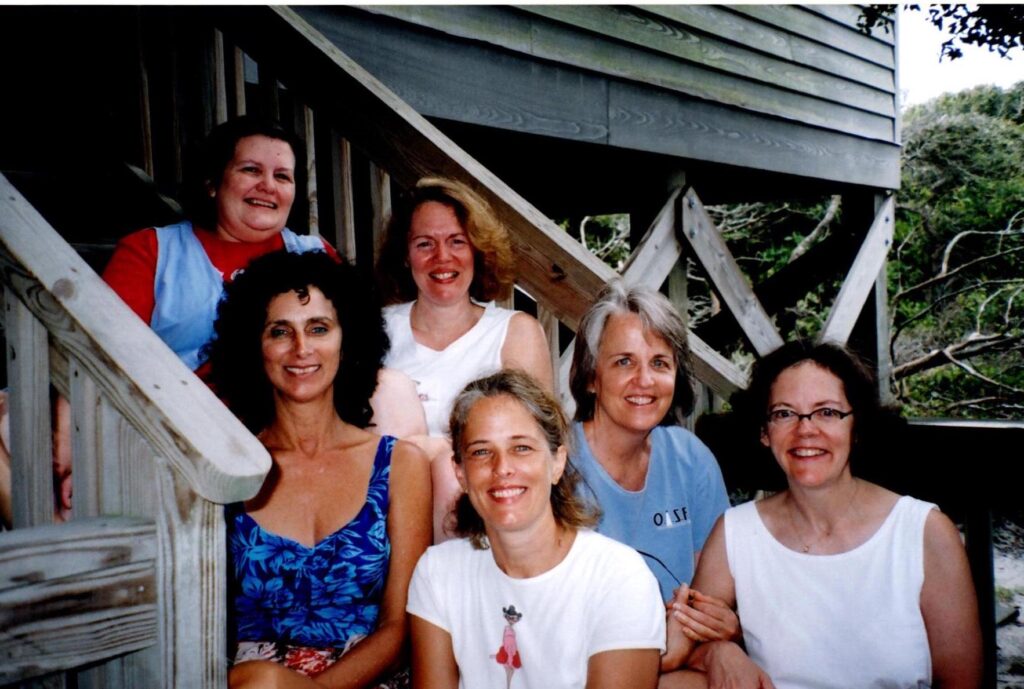
So reads the first paragraph of a bright yellow flyer from the 2003 ‘Creativity and Spirituality’ retreat with RCWMS.
Introduction
Welcome to the second installment of Notes from the Labyrinth, where we reflect on past and present RCWMS legacy topics, interview staff and former contributors, and ultimately work toward a 50th anniversary book for the Resource Center for Women and Ministry in the South, a feminist nonprofit in Durham, NC.
The 50th anniversary committee spends a lot of time reflecting on the “secret sauce” of the Resource Center’s unusual ability to persevere, stay relevant, and uphold the mission that founder and executive director Jeanette Stokes imagined years ago: “Weaving feminism and spirituality into a vision of justice for the world.”
If you’re new to the Resource Center or need a refresher, RCWMS hosts a variety of programs with a feminist approach to creativity, spirituality, and social justice. This programming has included publishing books, producing CDs and documentaries about feminist artists, hosting conferences on topics ranging from quilting to preaching to economic justice, and a wide range of other impressive feats for a small, predominantly grassroots-funded organization.
As the founder and former editor of a magazine, I’m often drawn to the tangible products of RCWMS, such as our books or documentaries, as I know firsthand how challenging and all-encompassing these creative births can be. But, equally important and perhaps more foundational to the Resource Center is the creation of spaces where women, elders, queer folks, and spiritual people from all faiths can convene and find community.
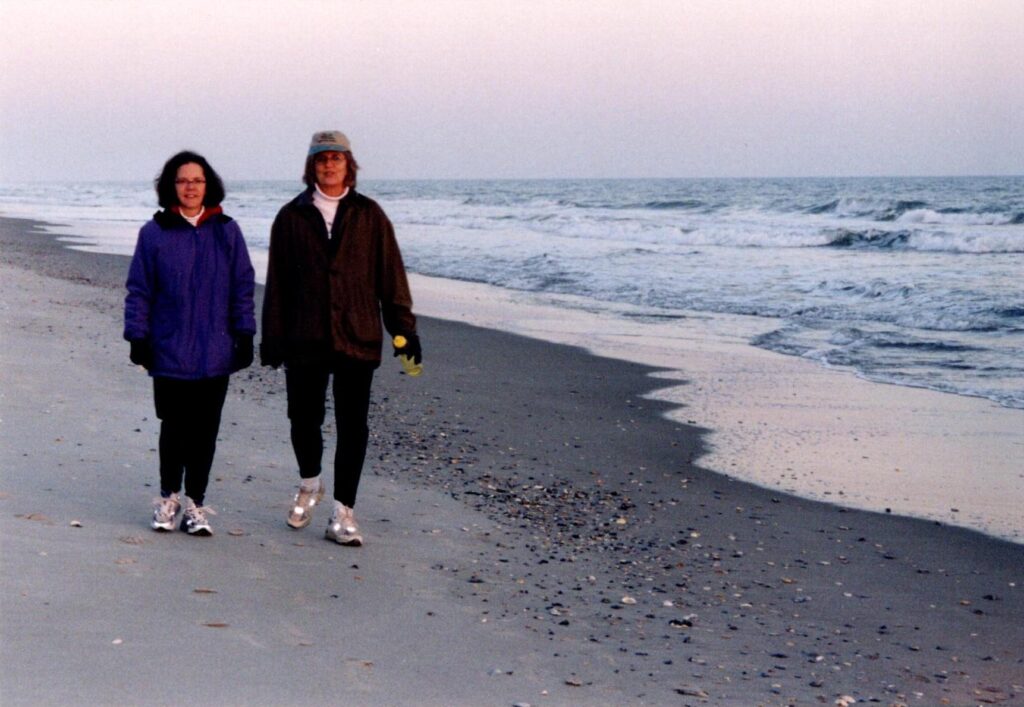
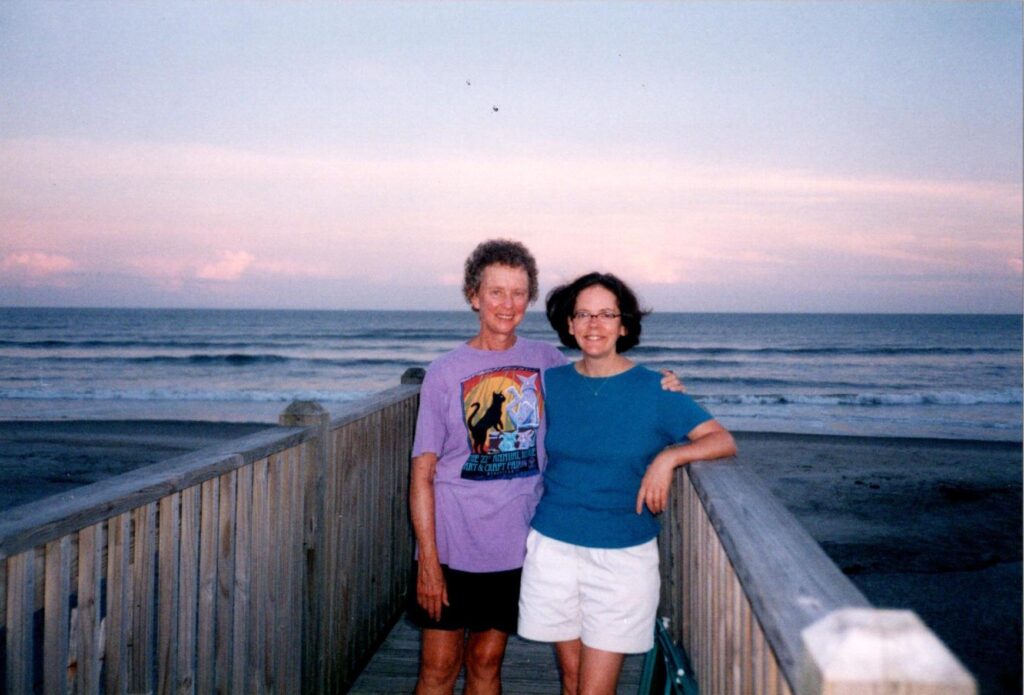
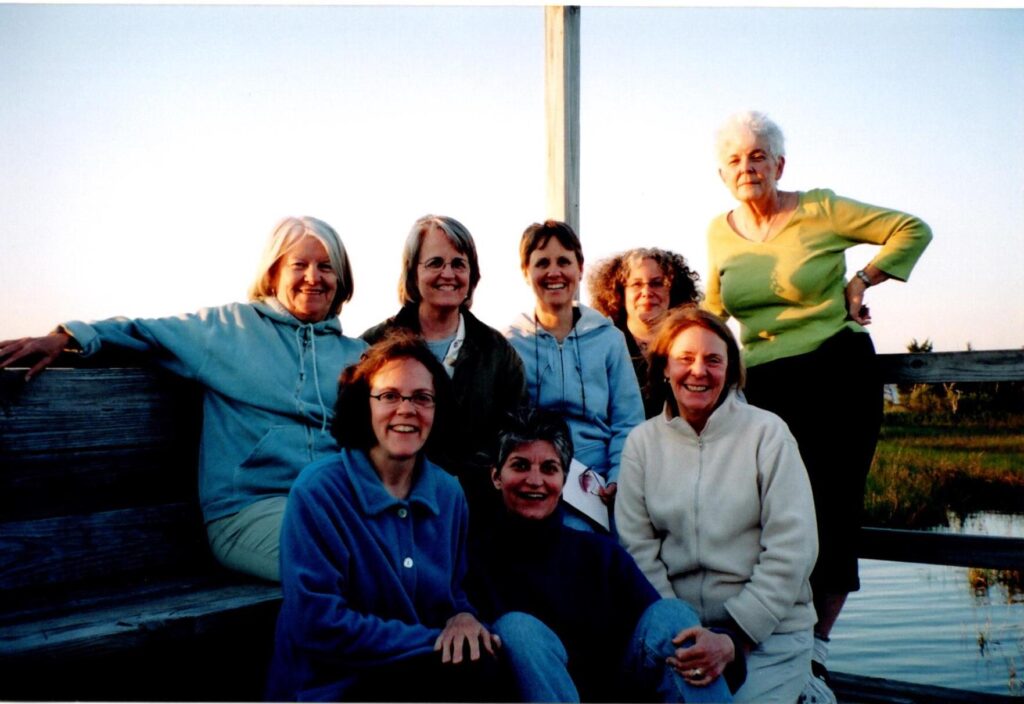
The Resource Center started hosting retreats as early as 1983, geared primarily at (you guessed it) women in ministry. The locations for these events shifted among various camps and conference centers across North Carolina before finding a home at Trinity Center, an Episcopal conference center on the NC coast. The Resource Center first brought retreats to the beach in about 1993, and over thirty years later, we’re still hosting regular retreats there.
For this essay, I’m interested in exploring the relationship between RCWMS and the beach, why Jeanette Stokes felt so called to keep bringing women here, and the impact of these retreats on participants, myself included.
Part One: Jeanette.
A love of water was instilled in RCWMS founder Jeanette Stokes at an early age by her father, E. Malcolm Stokes, a former collegiate swimmer and diver. He made sure that water was a regular part of his family’s life, even in the landlocked state of Oklahoma, where Jeanette was raised. In our interview on the topic, she told me that even now, 50 years after his death, he’ll still sometimes appear to her when she’s in the ocean.
As an adult, she’s held the practice of sojourning to the beach near and dear. The beach helped her realize that one of her favorite things in life is to have unstructured time with no demands on her. Sometimes this means having the beach be the place where she can physically remove time from her body. She recalled this story from the 1990s:
“My then-husband John and I went to Ocracoke for two weeks. And I took off my watch. And I never put it on again. Of course, there are clocks everywhere, so I’m never away from time. But I took time off of my body. I liked my watch, but I took it off to be at Ocracoke. And I was completely ‘Ocracoked’ with a D on the end. And it just made a huge difference.”
On that trip, she wrote the following excerpt in an essay:
For two weeks this summer, I sat in a white Adirondack chair on a screened porch and stared at a bush. It was not just any bush. A white oleander bush in the front yard of a rented cottage on Ocracoke Island off the coast of North Carolina.
I sat. With my notebook lying open on the wide flat arm of the chair, I sat. Because the bush was magical. Because gravity exaggerated the slope of the chair and made it hard to get up. Because I wanted to hear the inside of my head, I sat.
By submitting to the slow rhythms of “beach time,” Jeanette allowed herself to relax and focus in a way that never seemed possible amidst her daily life running a nonprofit in Durham.
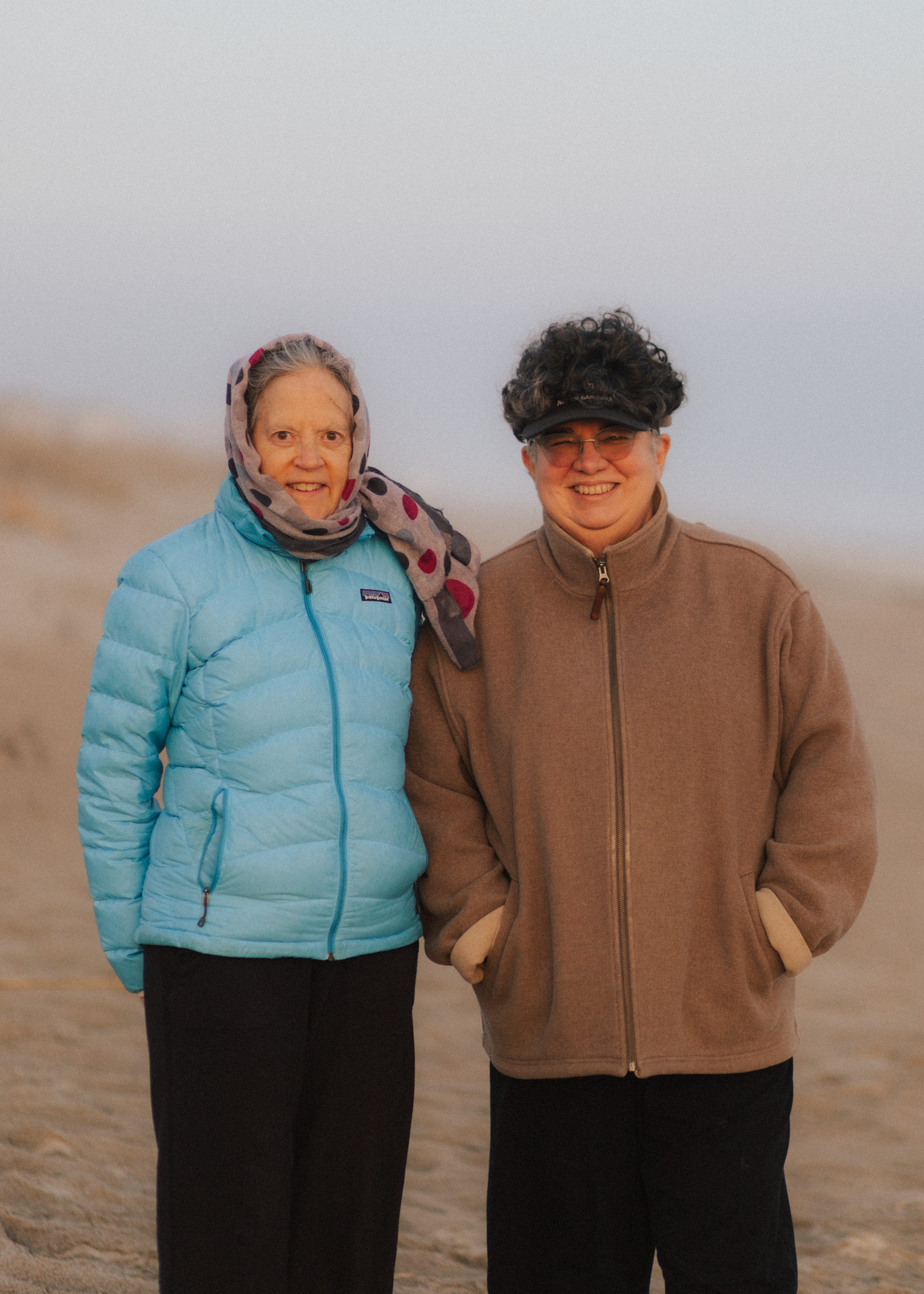
Around the time of her Ocracoke epiphany, the Resource Center officially started hosting retreats at Trinity Center. In the time since, hundreds of women have benefitted from these periods of relaxation and concentration around like-minded peers. One such person is Betsy Barton, whom I had the pleasure of speaking with while sitting feet-up at the beach.
Part Two: Betsy
Betsy has been attending RCWMS-sponsored art retreats since 2008. The first retreat she attended, led by Sue Sneddon, coincided with a period of immense grief and transition in Betsy’s life. She had known Sue as a community member before the retreat was advertised, and reached out to Jeanette as soon as she heard about this opportunity.
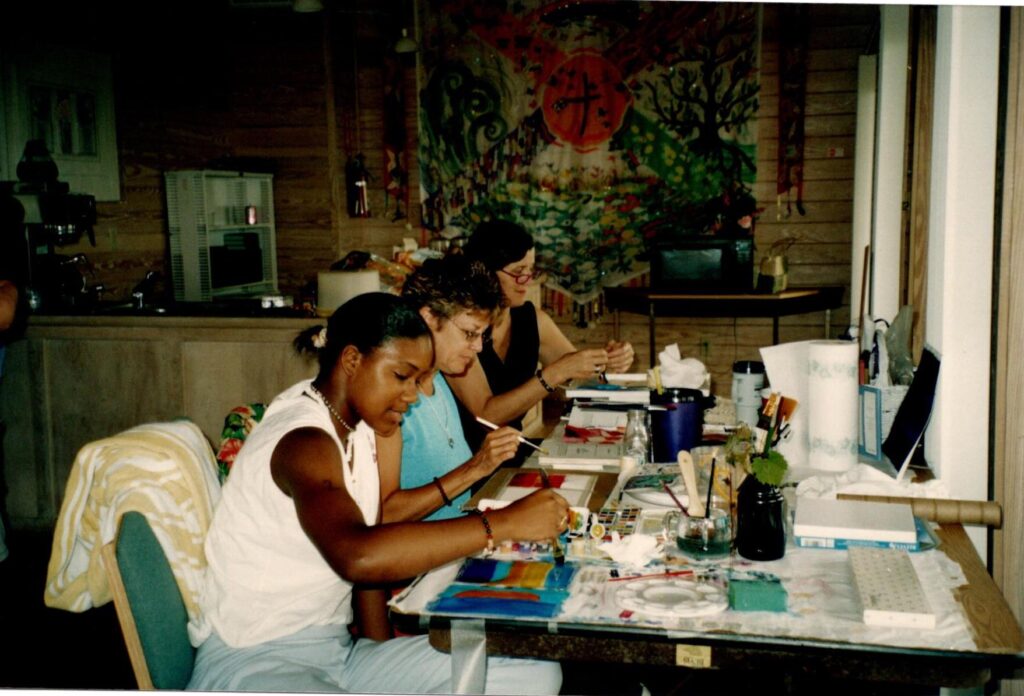
Betsy says that these gatherings opened up the artist inside of her. Before these retreats with Sue, Betsy was content to live a life appreciating her collection of art supplies and paints. Sue showed her how to use them. As she says, “Sue taught us how to see.”
Sue would lay out over a dozen workstations with different art media: watercolor, charcoal, acrylics, etc. Retreat participants could try out different stations and media, painting the same item in different ways, with the ultimate goal of discovering their medium. For Betsy, that’s chalk pastels.
By experimenting with different art methods, Betsy discovered just how much she enjoys the process of art-making. The goal isn’t for the finished piece to look a certain way; it’s all about the meditative process of getting there.
Still, chalk pastels are something one could do just as easily at home, in solitude. When I asked why she wanted to keep coming to these art retreats well after she discovered her medium, she told me the following:
“I really enjoy that, just like karate or yoga, this is an individual pursuit of something in a group context. So I would do my thing and just hear people talking and doing whatever they’re doing but I often wasn’t talking to them. I was just doing my thing.”
– Betsy Barton
Whether it’s a retreat for art-making or writing, the retreats that RCWMS leads provide space for like-minded folks to just create, quietly and with company. The time and physical distance away from everyday life back home help create a container for internal spaciousness.
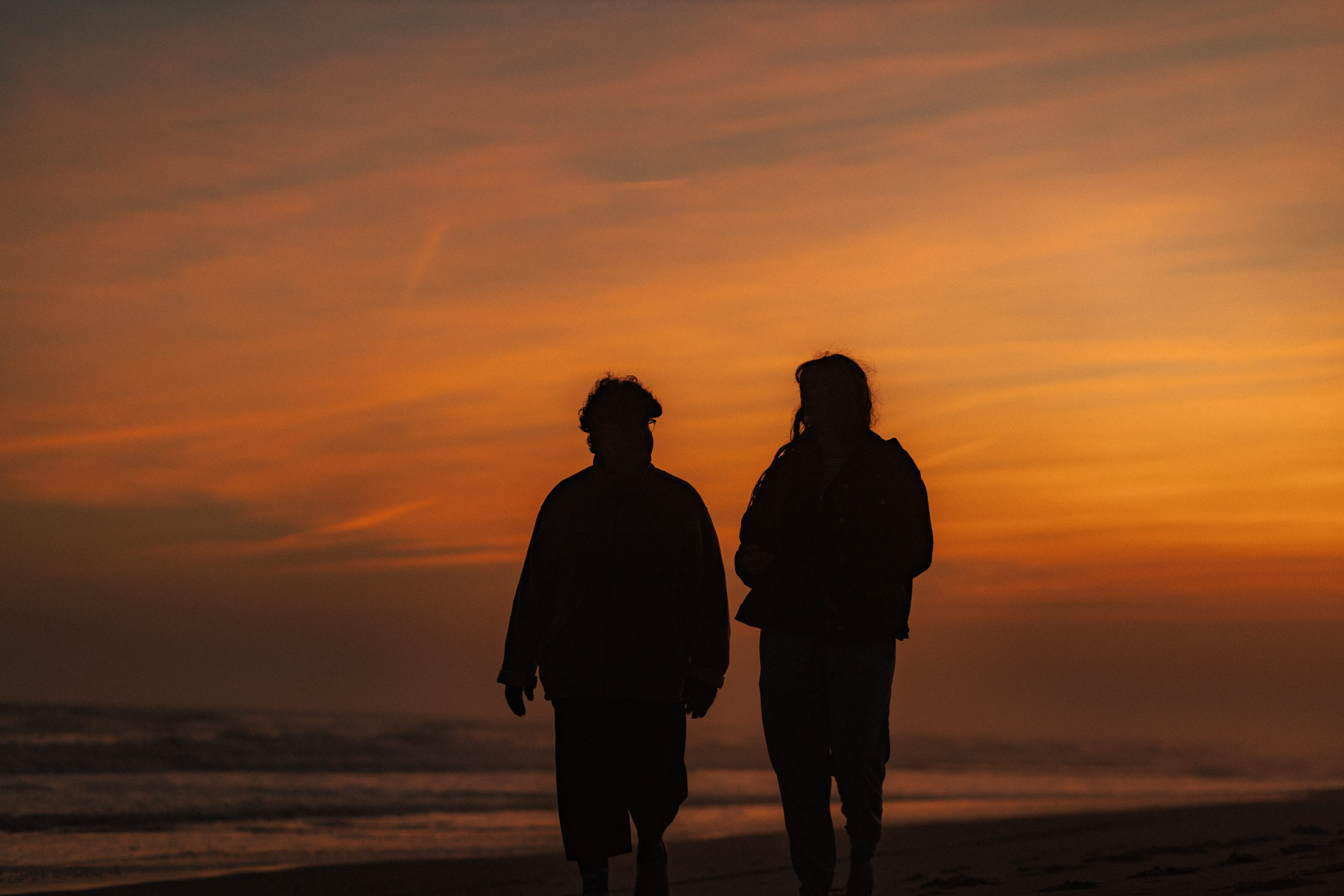
Lucky for me, I got to experience this firsthand a couple weeks ago. What I was able to create in just a few days turned out to be some of my favorite work that I’ve made in years.
Part Three: Claire
In addition to being a staff member of RCWMS, I am a photographer. I walk that fine line that a lot of working creatives must walk: I make money by offering my photography services to clients, often in the form of portraits, grad photos, weddings, etc. Somehow I must also keep internal space for the creative gifts unique to me that want to emerge through my photo making. When your passion becomes an income stream, it is frustratingly easy to forego the fun, personal projects in favor of the projects that help pay the bills.
All of this was true when I eagerly accepted Jeanette’s offer for a weekend staff retreat at Emerald Isle. We got to stay at a beautiful vacation house offered to RCWMS by Julia Batten Wax of Emerald Isle Realty, who regularly allows RCWMS to use a house or two for a week or more in the off-season. (Julia, if you’re reading this, thank you, thank you, thank you!)
The staff that was able to join this year included Margie Peeler, our Pastoral Fellow; Lara Struckman, a 2025 Anita McLeod Intern; and myself, Claire Hambrick, current Art Coordinator and 50th Anniversary Curator.
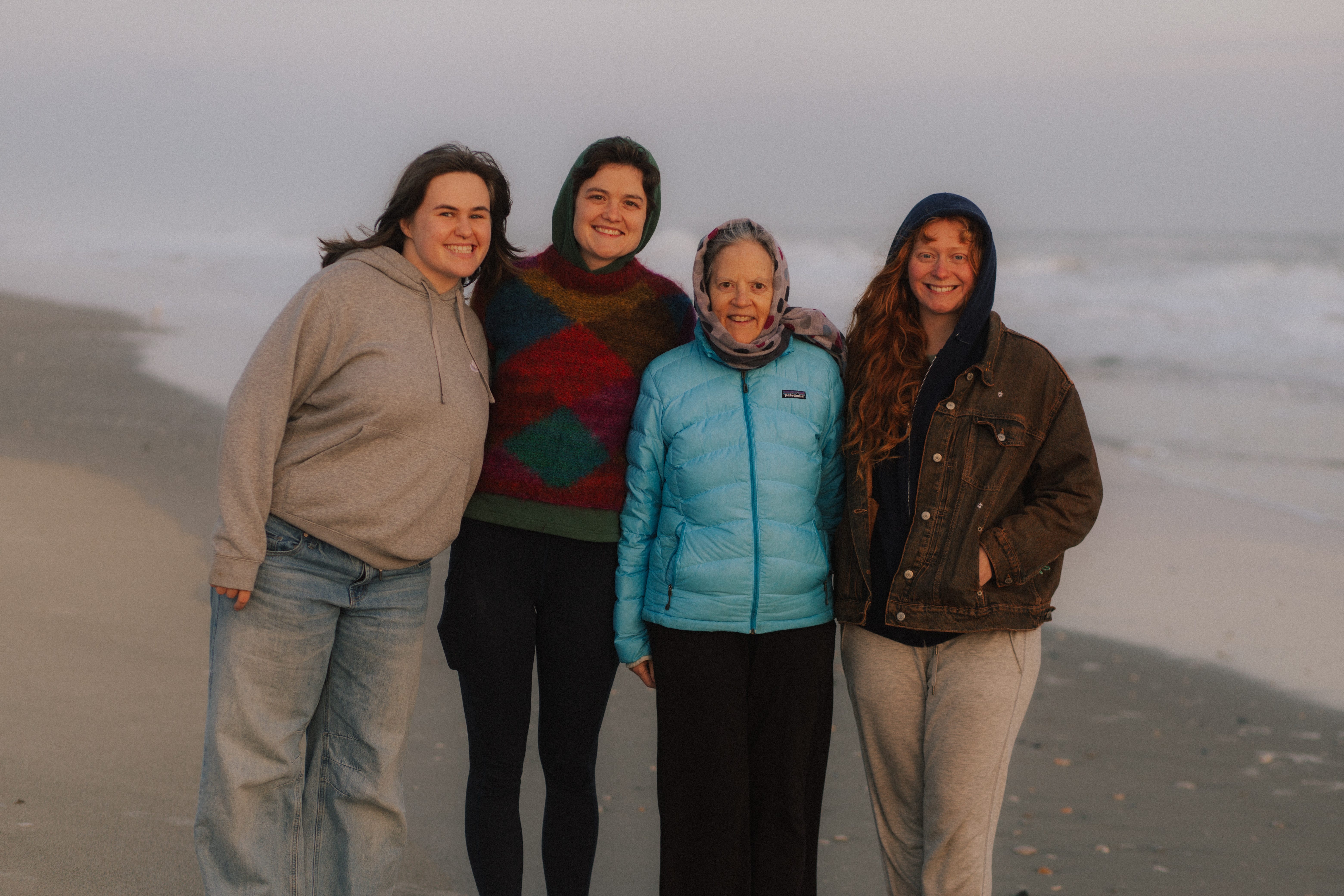
It was lovely to get to know the women I work with in a relaxed, informal environment. We were encouraged to spend mornings and afternoons how we please, joining together at lunch and dinner to break bread and share whatever was on our mind. I spent my free time doing my favorite leisure activities: reading, writing, jogging, and spending a lot of time in the outdoor hot tub overlooking the sound.
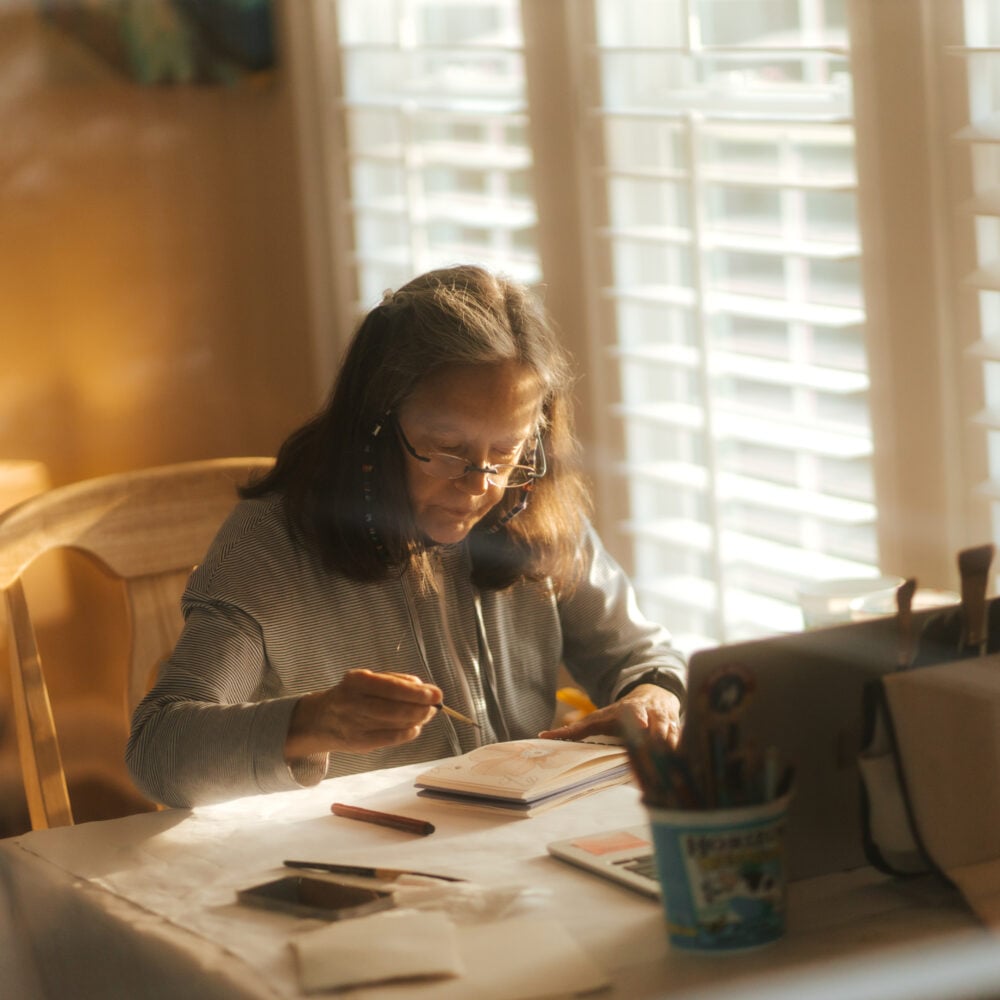
I had brought my camera to take a few photos of Jeanette at her work station for this article. Practical, not entirely creative.
After a few conversations with Lara, it dawned on us that we had everything we needed for a fun, creative photoshoot right there behind the beach house. Lara was happy to model and channel her inner muse as we explored the moodiness of the sea. We did not plan it, we did not overthink it, we just experimented with crafting photos that captured something about how we were feeling.
Every once in a while, Jeanette or Margie would check on us and laugh at the objectively silly sight of two young adults standing up to their knees in the cold ocean water in the middle of February.
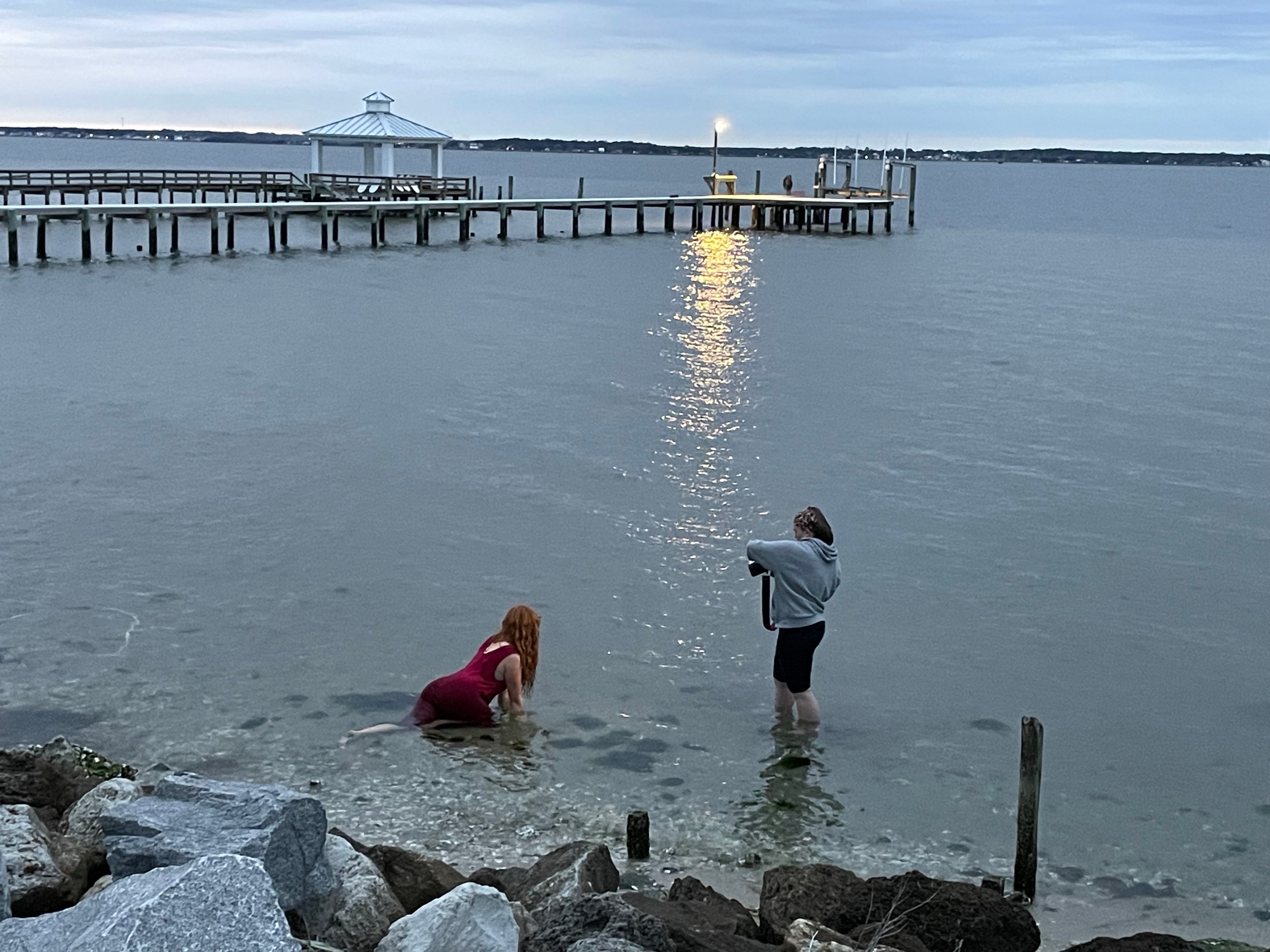
What Jeanette saw (above)
The photo we were making (below)
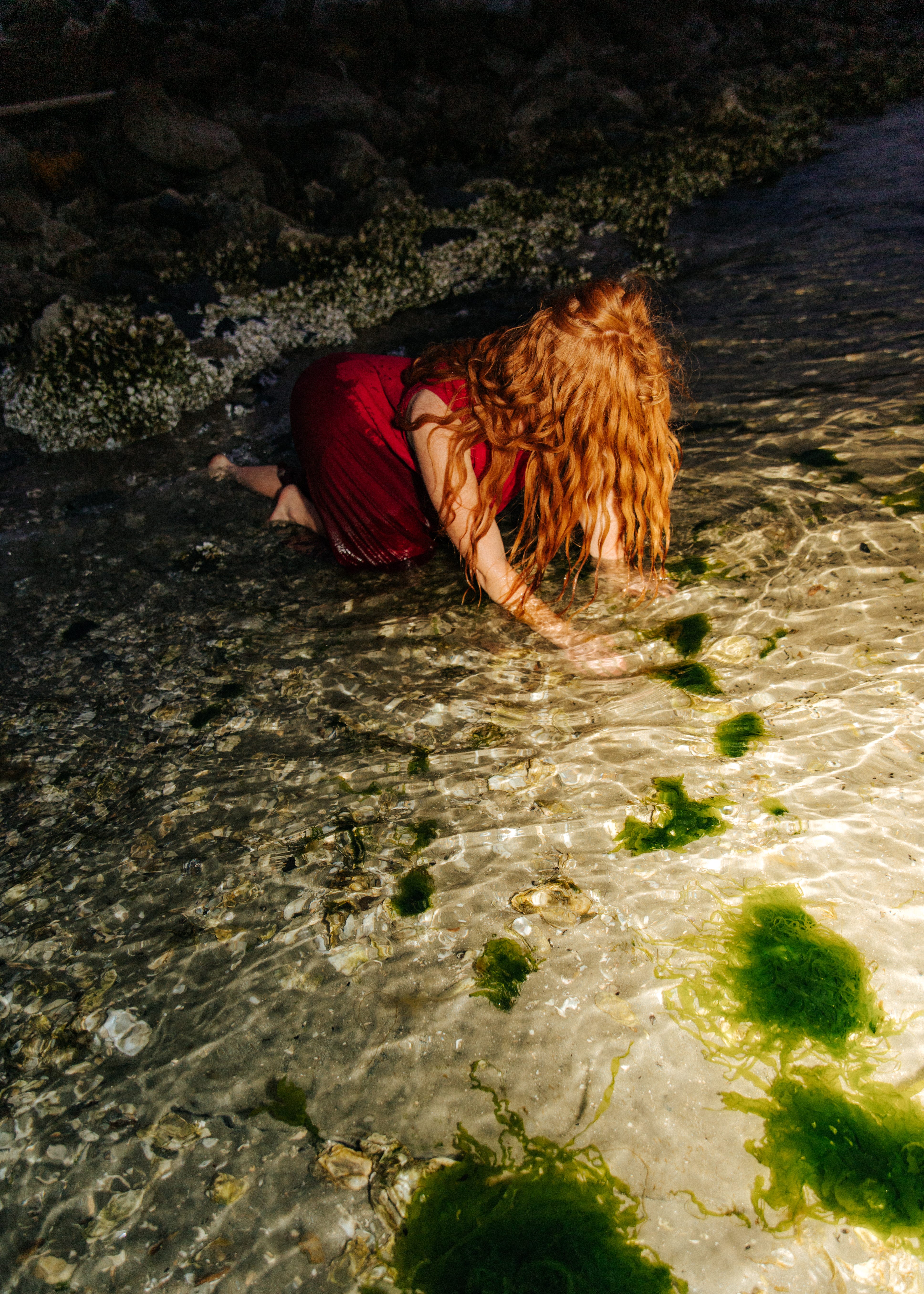
I can’t stress enough how these photos never could have happened without several days of quiet, no-pressure, beach retreating.
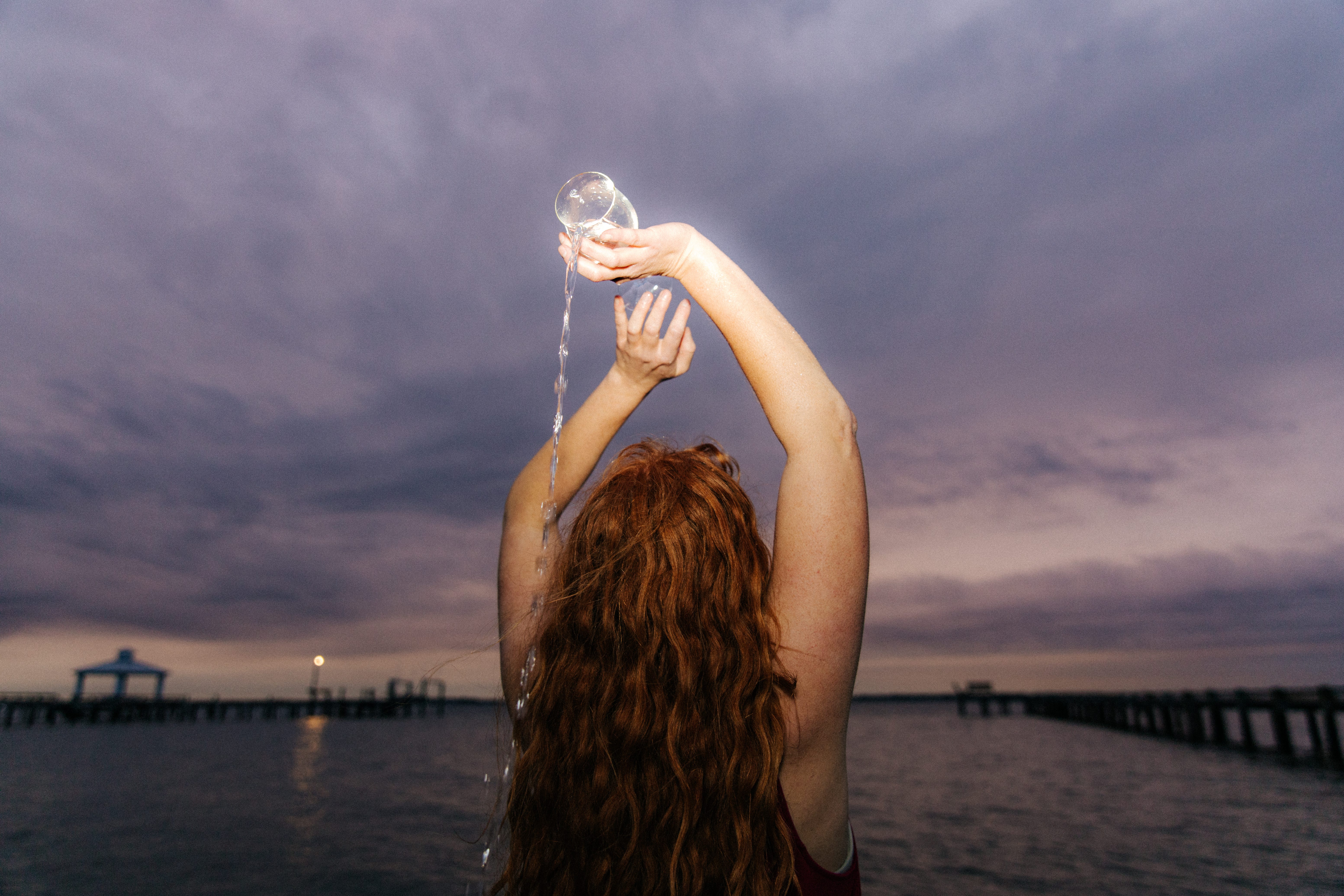
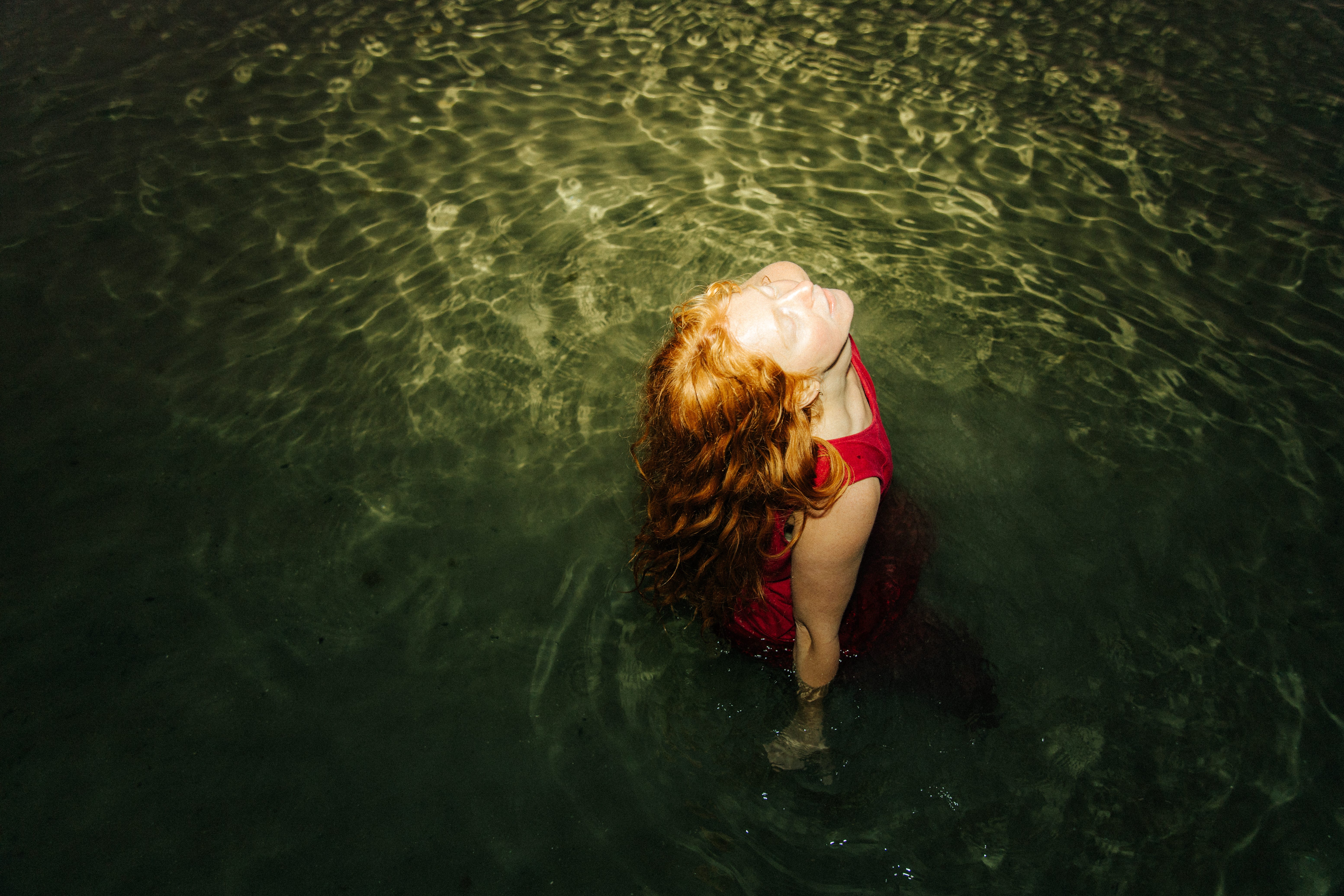
(If you’re interested in seeing more of my photography, you can find my website here.)
On the last night of our retreat, Jeanette described what she had been up to that day. Amidst her usual list of walking, writing, painting, and resting, she shared an anecdote I won’t soon forget. She said that on her walk along the beach, she stopped to yell into the ocean, “I’m the luckiest girl in the world!”
Being a part of the web of RCWMS, getting to know all the kind, brave, insightful women I have been able to meet along the way makes me, too, want to yell into the ocean about how lucky I am.
May this essay be a reminder of the importance of taking some time away from everyday life, in the company of like-minded women and kinfolk. We must carve out intentional time to quiet the notifications and demands of daily life, if for no other reason than to finally hear the creative pulse within all of us.
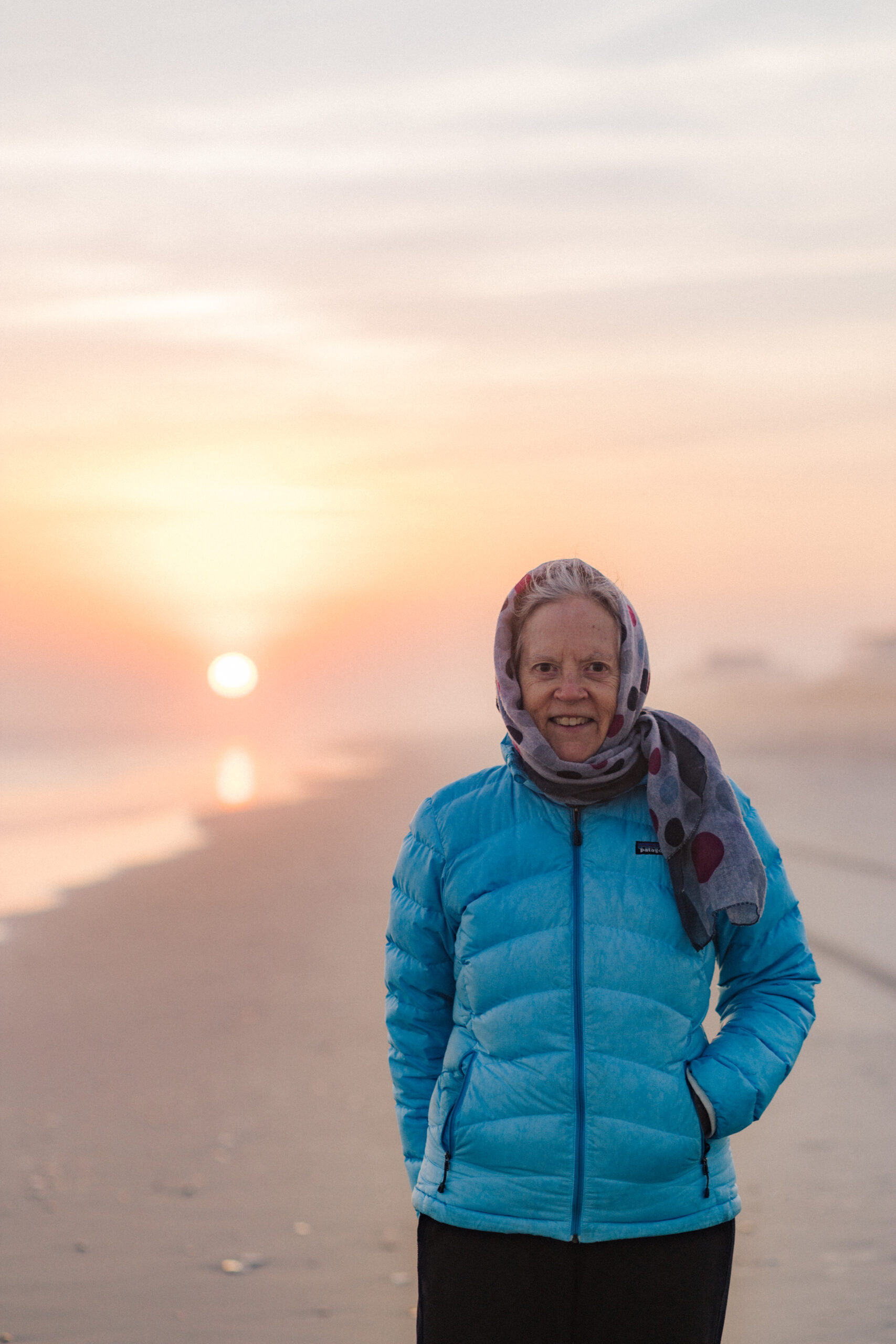
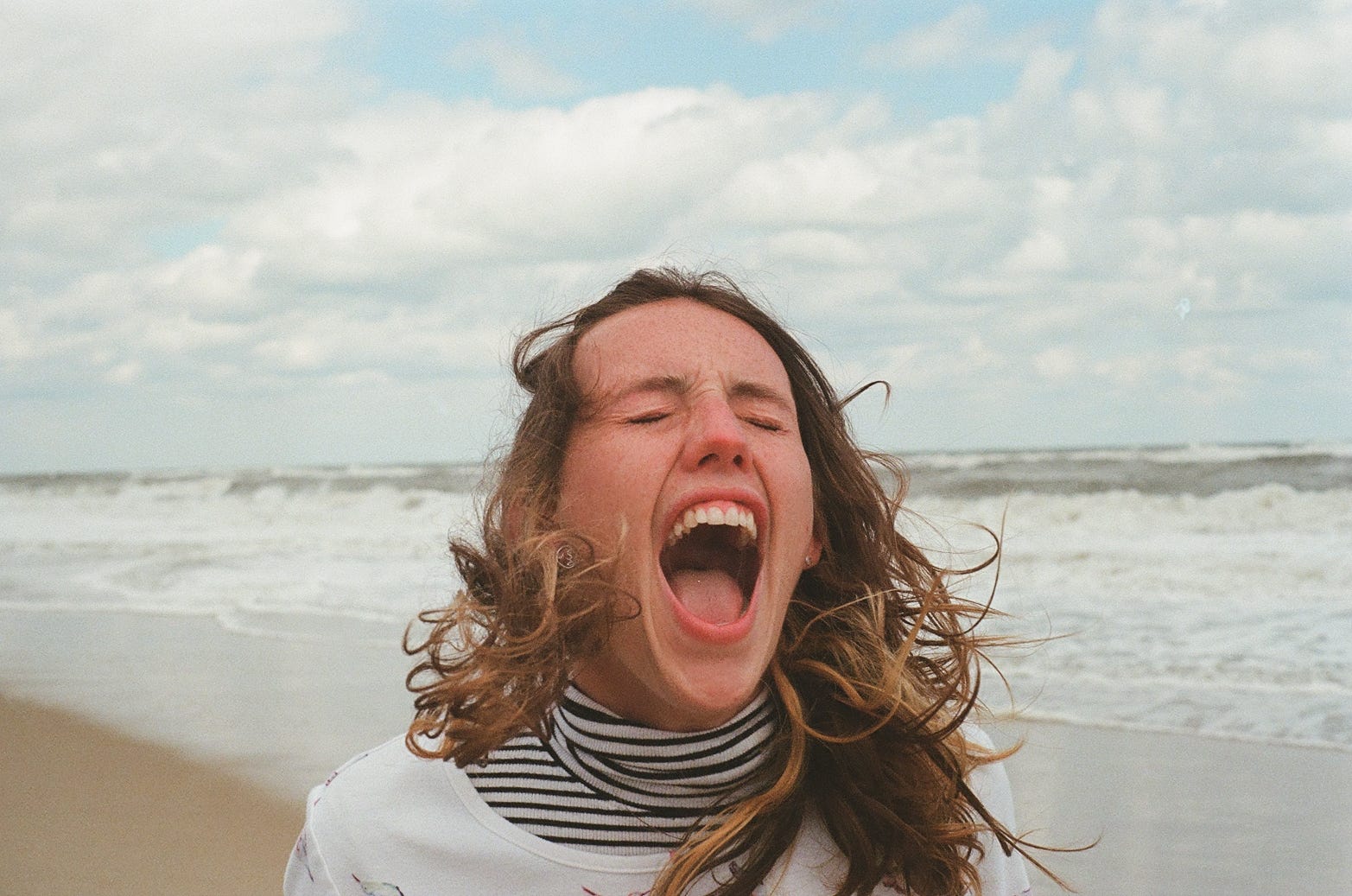
I’ll leave you with a photo I took in 2021 on a spring break trip with my dear friend and poet Katie Gunzenhauser. This photo always reminds me of how necessary it is to re-wild ourselves at the beach!
Leave a Reply